Challenge of Skilled Labor Shortage: How Automation through IoT Can Help
IoT automation of work processes is the future of efficiency. By automating work processes with IoT, you can increase productivity and much more.

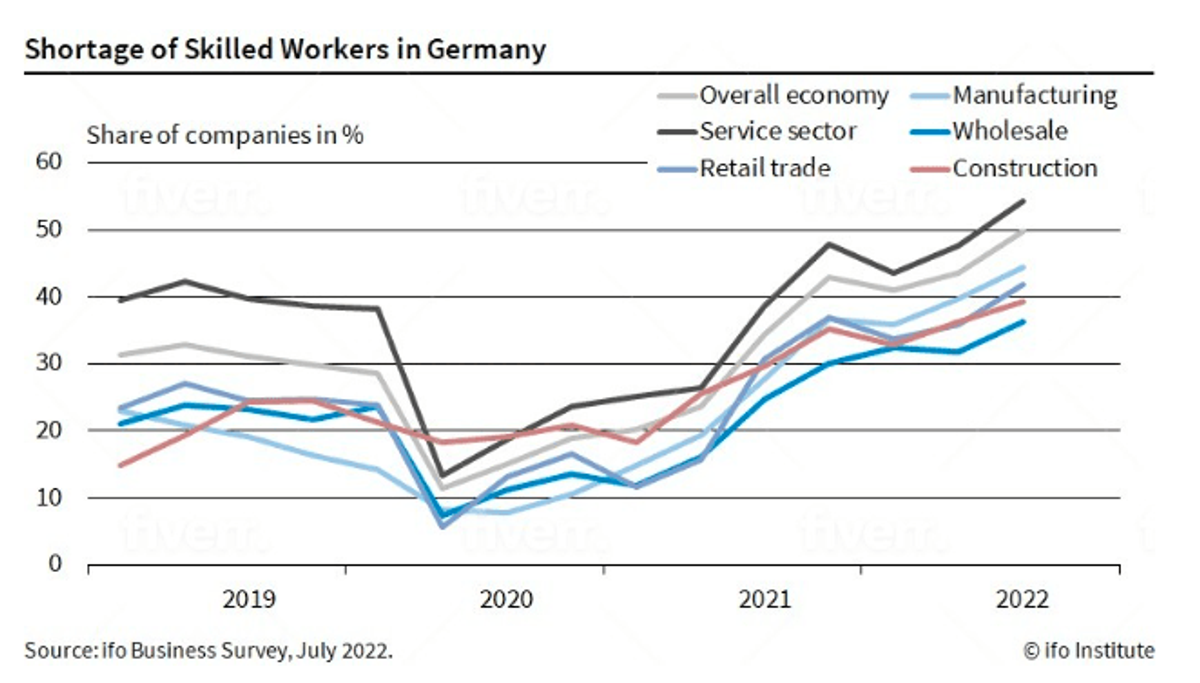
In July 2022, the shortage of skilled workers reached a new high, with 49.7 percent of the companies surveyed affected. This result is based on data collected since 2009 as part of the ifo Business Survey (1). But how can automation help?
What does IoT automation mean?
IoT automation enables repeatable or predictable workflows without manual intervention by having work processes executed by machines or software solutions.
Conclusion?
Accelerate your workflows by eliminating manual steps to increase productivity and efficiency.
The IoT automation process is designed to
- centralize information
- simplify the business process
- increase delivery speed and quality
- reduce the need for human intervention
- eliminate bottlenecks
- reduce errors and data loss
- minimize costs
- accelerate transparency and cross-departmental communication
What do automation processes have to do with IoT?
The Internet of Things (IoT) is a key driver for the development of industrial automation systems. Combined with computer-aided automation controls, IoT helps streamline industrial systems and improve data automation, particularly to eliminate human errors and inefficiencies.
To achieve this on an industrial level, multiple layers of devices are deployed. From the field level (factory), analysis devices, actuators, robotics, etc., transmit IoT and automation data to local process control units, which then forward them to the higher-level software for supervisory control and data acquisition. Machines at the field level can perform tasks automatically, while a human monitor can intervene and communicate with the system at each level.
How does automation affect processes?
Every day, employees perform hundreds of simple, repetitive, and tedious tasks. However, these are necessary for the company to function and comply with regulations. With the help of IoT and IoT devices, these tasks can be automated. This allows employees to focus on more important tasks. The benefits derived from these business processes are as follows:
- Cost reduction: Save time and money by simplifying key components.
- Productivity increase: Discover the full potential of your employees by optimizing the use of existing machines.
- 24-hour availability: Machines can work around the clock without you having to worry about the work.
- Absolute reliability: An automated system works faster than a worker. The end product can therefore be produced with greater control and quality.
- Better performance: By outperforming your competitors, you can increase your efficiency and productivity. Bottlenecks that slow down the workflow are eliminated.
- Fewer manual errors: Automation through IoT and thus all automated systems avoid errors and failures and increase production safety and continuity.

What benefits does automation offer companies facing staff shortages?
The benefits of automation through IoT must first be communicated to employees through appropriate training. Complementation, not replacement – employees should be informed that automation through IoT is not intended to take away their work but to support them in doing their work more easily and quickly. In addition, they can benefit from further training and advancement opportunities.
Furthermore, IoT automation offers companies very important advantages. These include shorter production times and higher throughput, fewer human errors, and more safety, as employees are less involved in the production process. Staff may need to acquire new skills to ensure automated systems run smoothly.
New workflows typically also affect multiple teams and processes, meaning more training is required throughout the organization. Research also shows that companies committed to IoT and automation are better managed even in times of staff shortages or during a pandemic. Automation through IoT increases productivity and opens the door to quality and sustainable service. Small and medium-sized enterprises should also be open to automation to avoid bottlenecks due to staff shortages.
How can employees benefit from IoT process automation?
1. Automating tasks increases productivity of staff, as less time is spent on monotonous and manually performed tasks. Automating processes allows employees to use their skills for more important tasks.
2. Lower labor costs create new opportunities: Automation through IoT not only helps employees complete lengthy and tedious tasks but also significantly reduces a company's labor costs. Furthermore, it allows staff to work more focused and engaged.
3. It increases efficiency: IoT automation eliminates inefficiencies in the company by automating repetitive tasks through intelligent processes.
4. Improved work areas: Sensors for monitoring lighting, heating, and air quality can be used to create an optimal environment for employees. This is important to keep them engaged with their work and more productive.
5. More safety for workers: Employers use IoT safety technology in the workplace to reduce the risk of injury. This significantly reduces the number of workplace accidents. Employees are equipped with wearable devices and RFID tags that track their movements to improve ergonomics and detect accidents.
What are the first steps to address the labor shortage with IoT and automation?
Step 1: Align IoT automation with long-term goals
Automation has enormous potential for the modern workplace when used purposefully. The right agile technology can increase a team's productivity and speed, reduce errors, and improve the customer experience. The key to leveraging all these benefits is to have a clear idea from the start of what you want to achieve with IoT automation.

Step 2: Use automation to reach the younger generation
For many companies, the younger generation represents a great opportunity to attract new talent. Worldwide, millions of people have retired or decided to change careers. In most industries, there are not enough new workers to replace these lost skilled workers. If companies want to adapt and transform at a competitive pace, they must ensure that their work environment is attractive to Generation Z and young workers. The use of IoT-supported automation can help define a company as a forward-thinking, tech-savvy brand that is more appealing to digitally native professionals.
Step 3: Use automation in the recruitment process
Automation can speed up the hiring process for new team members and find the best candidates for each position.
Step 4: Motivate and retain employees with automation
As mentioned earlier, automation can help companies appeal to the younger generation. It can also be an excellent tool for attracting different types of employees of different ages. Almost 85% of today's team leaders believe that automation will help them retain employees and recruit new talent faster.
Use IoT to better manage the labor shortage.
Read on
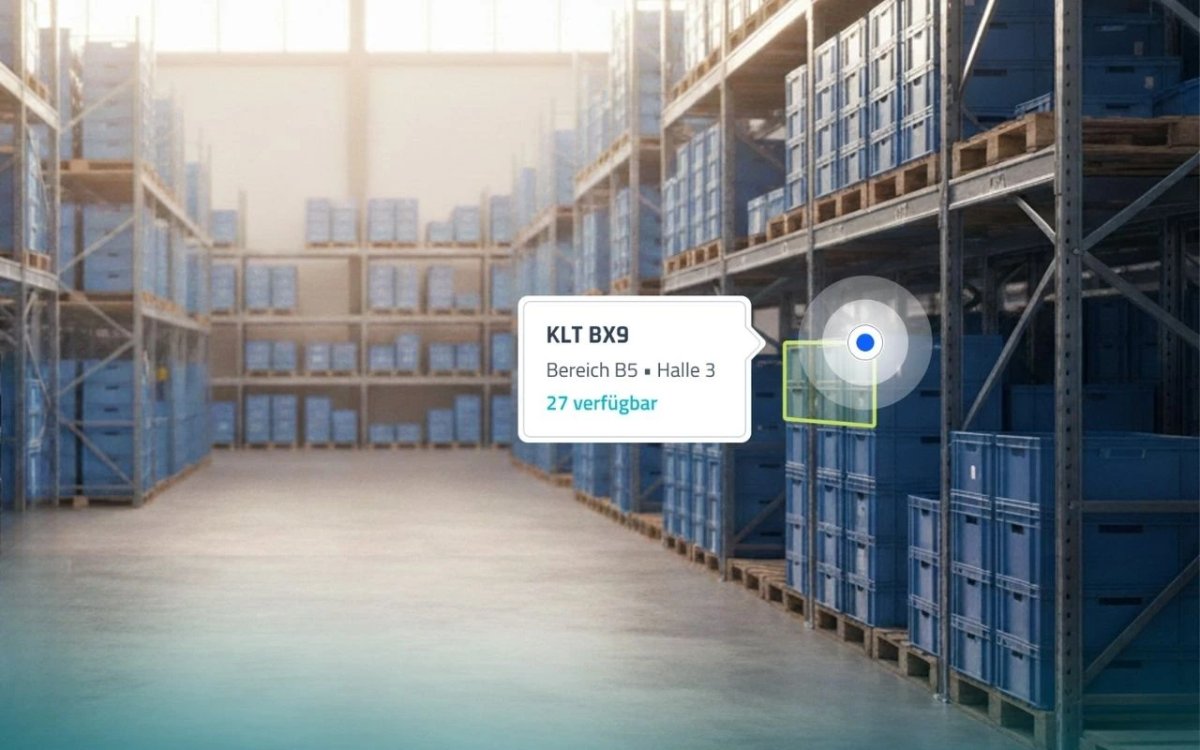
Digital Container Management 4.0: The Partnership of SmartMakers and LOGSOL
Monitor containers more efficiently ✓ digitally connected load carriers ✓ reduce costs through container management 4.0 ✓ Read the article now!
Optimizing Port Operations: Best Practices for Increasing Throughput and Reducing Costs
Maximize the efficiency of your port logistics in 2026: Discover how IoT solutions increase throughput, reduce costs, and enable predictive maintenance.

Data That Moves - Interview with Sebastian Stute
Learn how SmartMakers automates and simplifies production and logistics processes with IoT tracking and real-time data.