Strategies for Success: IoT in Warehouse Management
Discover effective strategies for success in integrating IoT into your warehouse management. Optimize your warehouse today!

This article is dedicated to one of the most groundbreaking trends in modern warehouse management: the implementation of IoT technologies. Our aim is to present you with a comprehensive guide that highlights the best solutions and strategic approaches to seamlessly integrate IoT into warehouse management. In detail, we explain how these technologies can help optimize warehouse operations and increase efficiency.

Introduction
The term Internet of Things (or IoT) describes the networking of physical objects with the internet, enabling data collection and exchange. In warehouse management, this technology has taken on a transformative role. With the help of sensors, devices, and systems, warehouse processes can be seamlessly monitored and controlled, ultimately leading to greater transparency and efficiency. Additionally, numerous processes can be automated.
The development of warehouse management through IoT ranges from simple improvements like real-time inventory management to complex applications such as vehicle coordination and predictive maintenance. This has not only revolutionized the way modern warehouses are operated but also opens up new possibilities for data-driven decision-making in companies. In the following sections, we provide you with an insight into this fascinating development and highlight how IoT is redefining warehouse management.
Integration of IoT into Warehouse Operations
The integration of IoT into ongoing warehouse management is a multifaceted process that begins with the careful selection and implementation of IoT devices suitable for your company. This includes various sensors, IoT-enabled warehouse equipment, and data analysis tools. These devices must be strategically positioned in the warehouse to capture and transmit data in real-time. The next step is to seamlessly integrate these technologies into existing warehouse management systems, enabling smooth communication and data analysis.
Key Benefits of IoT Solutions for Warehouse Management
IoT solutions for warehouse management offer three key benefits:
- Efficiency
- Accuracy
- Real-time Tracking
We will take a closer look at all three areas below.
IoT for Warehouse Management is Efficient
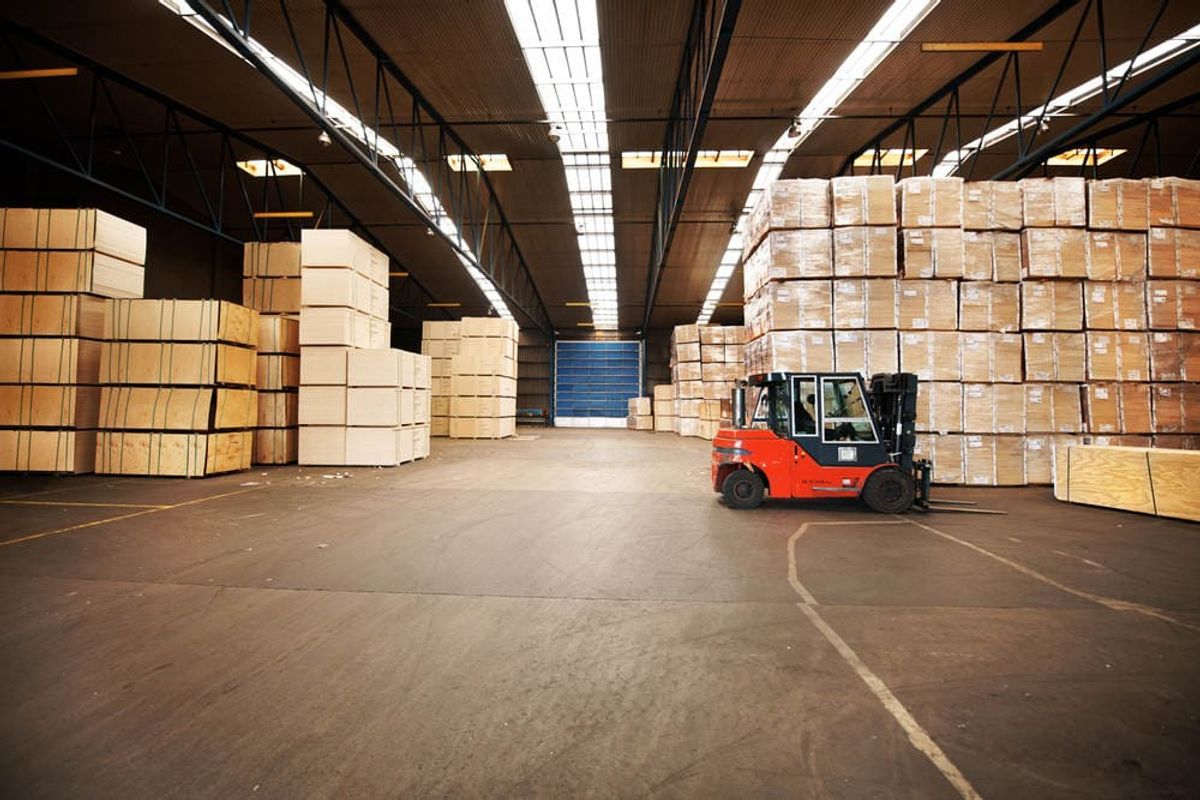
A standout advantage of IoT in warehouse management lies in its extraordinary efficiency. The automation of numerous manual processes by IoT devices leads to significant time savings. For example, sensors automatically detect changes in inventory, while IoT-enabled forklifts or drones optimize movements within the warehouse. This automation reduces the need for manual interventions, allowing employees to focus more on strategic tasks. Furthermore, the networking of devices ensures improved coordination and planning, minimizing idle times and enabling more efficient use of warehouse space.
An IoT-based Warehouse Management System Increases Accuracy
The precision of a warehouse management system is significantly enhanced by the use of IoT. Sensors provide exact information about inventory and its condition. This data is crucial to minimize errors in inventory taking and ensure more accurate order processing. Accurate inventory management plays a critical role in avoiding overstock or stockouts, which in turn helps reduce costs and increase customer satisfaction.
Real-time Tracking
Best Practices for IoT-based Warehouse Management
To fully leverage the potential of IoT-based warehouse management, companies can rely on best practices. These not only ensure efficient implementation but also help to benefit from the advantages of IoT in the long term.
Integration of IoT into Existing Systems
One of the most significant challenges in implementing IoT technologies lies in integrating them into existing warehouse management systems. To ensure seamless integration, companies are advised to adopt a gradual approach. IoT solutions should be carefully selected and adapted to ensure compatibility with the ongoing system. This includes selecting IoT platforms that can interact with existing database systems and installed application software. Effective integration allows your company to effortlessly capture and analyze data from IoT devices. The insights gained can then be used to optimize decision-making processes.
Optimization of Inventory Management
Optimizing inventory management is another central aspect of implementing IoT technologies in your company. By using IoT technologies with sensors, automatic inventory tracking and monitoring can be realized. These devices enable precise and timely monitoring of inventory. As a result, you can expect a significant reduction in stockouts or overstock. Companies should also utilize data-driven analytical methods to understand inventory patterns and better forecast demand. This leads to more efficient reordering and helps reduce warehouse costs.
Enhancing Safety and Security
IoT can also be used to enhance the safety and security of the warehouse. Surveillance cameras and sensors are used to monitor and detect unusual activities in the warehouse. Temperature and humidity sensors play a crucial role in controlling storage conditions, especially when dealing with sensitive or perishable goods. Real-time monitoring by IoT devices also enables immediate response to potential security risks or emergencies. A well-thought-out security strategy based on IoT technologies helps protect your company's assets while ensuring a safe working environment for employees.
Conclusion on Warehouse Management with IoT
The development of IoT is advancing rapidly, and new innovations have the potential to fundamentally change warehouse management as we know it today. Some of the most exciting future advancements will be enabled by AI algorithms that analyze IoT data and support companies even more effectively in warehouse management. Additionally, the combination of autonomous vehicles and robotics in warehouses, paired with IoT devices, will further increase efficiency.
To fully exploit the potential of warehouse management with IoT, it is crucial to consider all the mentioned aspects in strategic implementation.
The future of warehouse management will be significantly shaped by innovations in the IoT sector. Companies that invest in this technology now will not only increase their efficiency but also be well-prepared for the market demands of the coming years. IoT is more than just a passing trend; it is an integral part of the evolution of modern warehousing. As a decision-maker, it is therefore of great importance to set the course for a forward-looking implementation in 2024.