5 IoT Applications that Improve Warehouse Processes and Enhance Efficiency
Explore the power of IoT in the warehouse with 5 applications that enhance process efficiency. Use IoT in the warehouse for optimized operations!
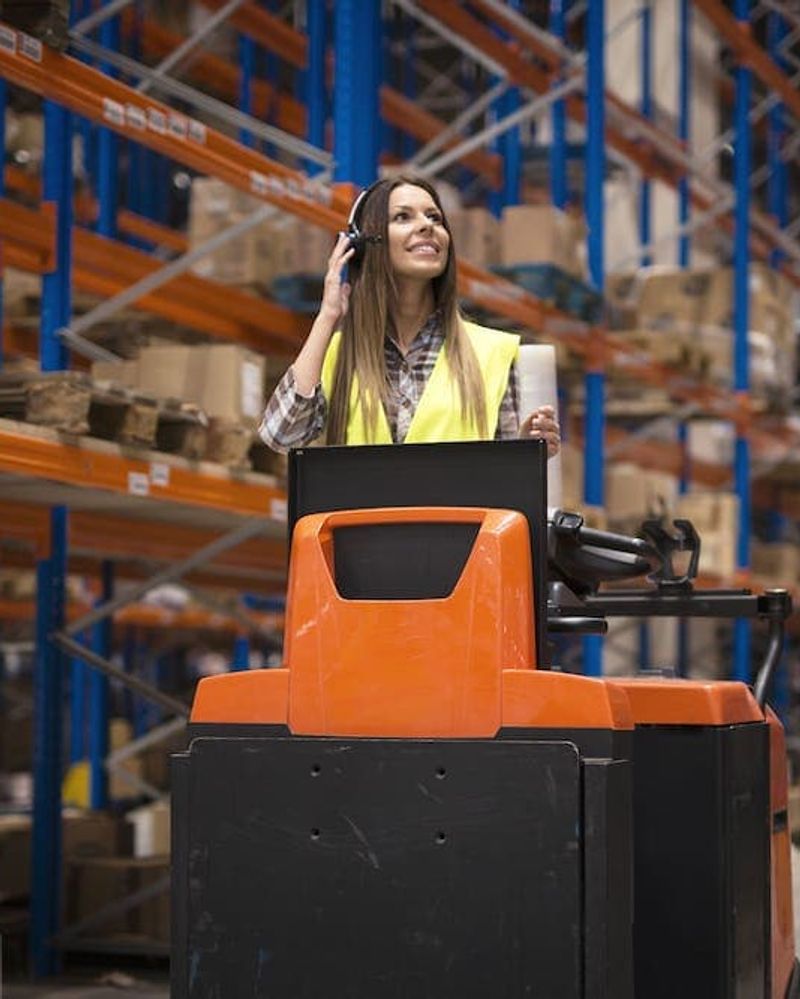
IoT applications are indispensable in modern warehouses. Those who forgo digitalization here will eventually fall behind. Large fashion chains that can react immediately thanks to IoT applications secure their survival and profits. But in which areas can the Internet of Things (IoT) be interesting for warehouses?
IoT in the warehouse has revolutionized the world: The days when employees walked through the warehouse in the evening to check which shelf needed restocking are long gone in profitable warehouses. With IoT in the warehouse, orders are automatically placed when sales are reported or storage locations are reported as empty. IoT applications and networking have already taken root in numerous industries and provide incredibly valuable services, for example in:
- Automobile manufacturing and distribution
- Food trade and production
- Industrial production
Just like in these key industries, IoT can be used for warehouse facilities and is being used. With IoT applications in the warehouse, numerous processes can be automated and simplified. This ranges from the flow of goods to the prevention of theft. The warehouse is part of the chain between parts supplier, product manufacturer, wholesaler, retailer, and end customer. Warehousing is expensive. Having unsold stock in the warehouse costs as much money as not being able to sell successfully selling goods due to lack of inventory. Successful warehouse facilities in Europe even go so far as to directly control the production of goods in Asia based on information obtained through IoT applications in the warehouse. Successfully selling products are immediately reproduced and delivered.
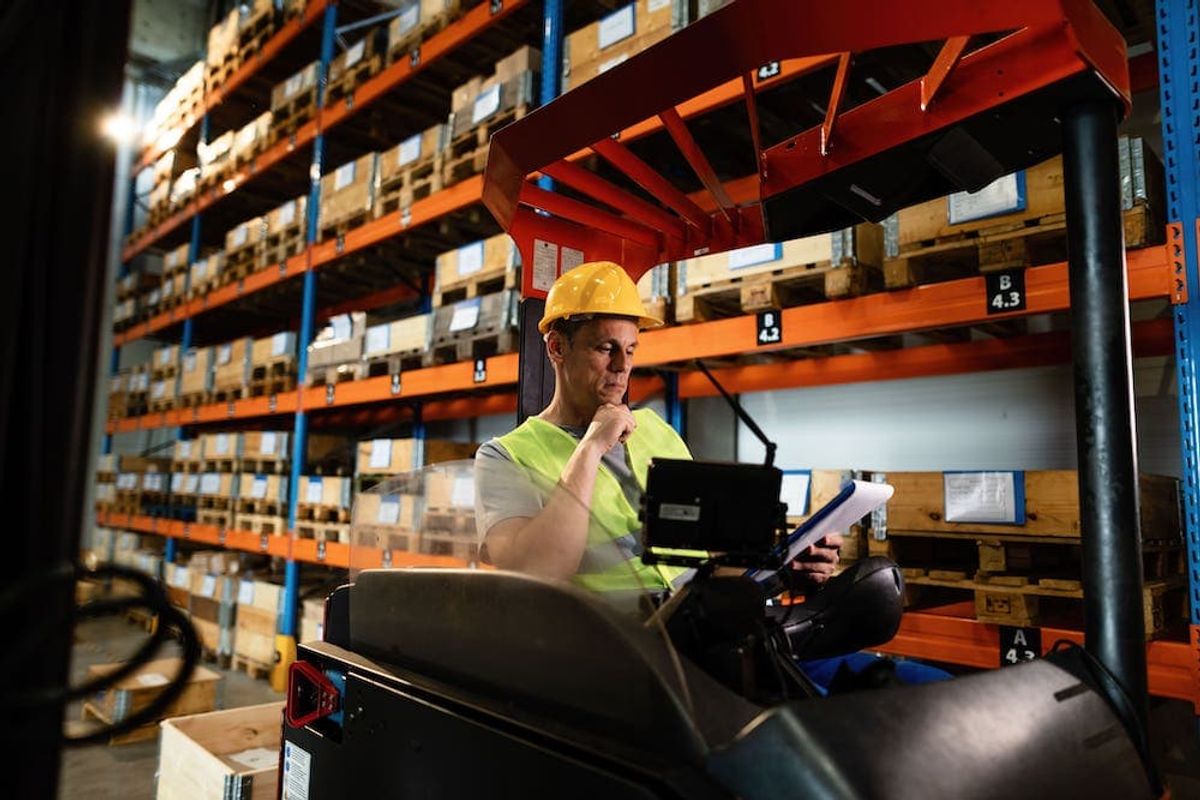
Fashion chains and department stores that rely on RFID and IoT
Retailers, fashion labels, and chains have long relied on IoT in the warehouse and use RFID chips to track not only the goods in the warehouse or department store but even the product from production to the store exit. Examples include:
- H&M
- Superdry
- Marc O`Polo
- Zara
...to name just a few.
IoT in the warehouse can do much more than you think
Through IoT in the warehouse, you can gain much more information than commonly thought. In addition to known information about inventory, shelf stock, sales, and thefts, you can also obtain information such as:
- Which products are present in a delivery and how often? The recording is done automatically via RFID- or NFC chips
- The warehouse employee can receive electronic information about the product directly at the shelf, such as item type, schedule for restocking, item inventory, item properties, future goods outflows
- Which items are particularly frequently taken from the warehouse – modern IoT applications then rearrange such fast-moving items in the warehouse to shorten walking paths. Dynamic warehouse optimization significantly reduces material procurement costs.
These are the top 5 IoT applications in the warehouse:
In all leading warehouse facilities today, you will find IoT technologies. The software, networking, and evaluation often make the difference. Overall, the following five key effects in the area of IoT in the warehouse are often encountered:
- Improvement of inventory management – increase in inventory accuracy
- Asset Tracking in the warehouse – from raw, auxiliary, and operating materials to tools, everything can be tracked, and you can get real-time information on where what is in what condition at the push of a button
- Improvement in predictive maintenance of facilities and equipment
- Improvement of environmental monitoring in warehouses
- Automation of energy management in warehouses

IoT makes inventory more accurate
Those who use IoT in the warehouse have a much more accurate inventory in the computer, which means that something is much less likely to be sold that should be there but is no longer there. Such inventory discrepancies can be largely avoided through IoT technologies. Sensors on the shelf detect how often which goods are still there. An empty shelf compartment can also be detected by sensors. If the shelf reported as empty does not match a computer inventory, it can either be immediately adjusted to reality or output on checklists. Both measures ensure that no goods that are no longer there are sold, which would lead to dissatisfaction among customers who have to be told after the purchase that the item is not available.
IoT in the warehouse reduces searching
Because in the modern warehouse all assets are equipped with IoT technology, the search effort is eliminated in many cases. No one has to search for a forklift or a pallet jack anymore because you know at the push of a button where they are currently located. The same applies to tools, company vehicles, or inventory. Searching costs money. With IoT in the warehouse, searching is a thing of the past. IoT means finding instead of searching. IoT sensors also report empty diesel tanks or dwindling lubricant containers in good time, just like the depletion of copier paper supplies. In many companies, there is still the employee who takes the last pack of some consumable without ensuring a reorder. With IoT in the warehouse, this, or the consequences of it, is a thing of the past.
IoT ensures better maintenance of devices and facilities
Through IoT technology in the warehouse, the devices and facilities used there last longer because maintenance intervals can be better recorded and evaluated. Necessary maintenance appears on monitors or smartphones and can be made dependent on time of use, movements, or processed quantities. Sensors provide the necessary data basis.
IoT in the warehouse improves environmental conditions in the warehouse
Through IoT applications in the warehouse, environmental conditions can be continuously recorded and evaluated. And more importantly: it can be responded to immediately and automatically. If the temperature rises, an air conditioner or ventilation can take countermeasures. If the CO₂ level in the warehouse rises (e.g., due to incoming vehicles), the ventilation can be controlled accordingly. In case of rain, roof hatches can be closed automatically, etc. This can improve working conditions for employees and also productivity.
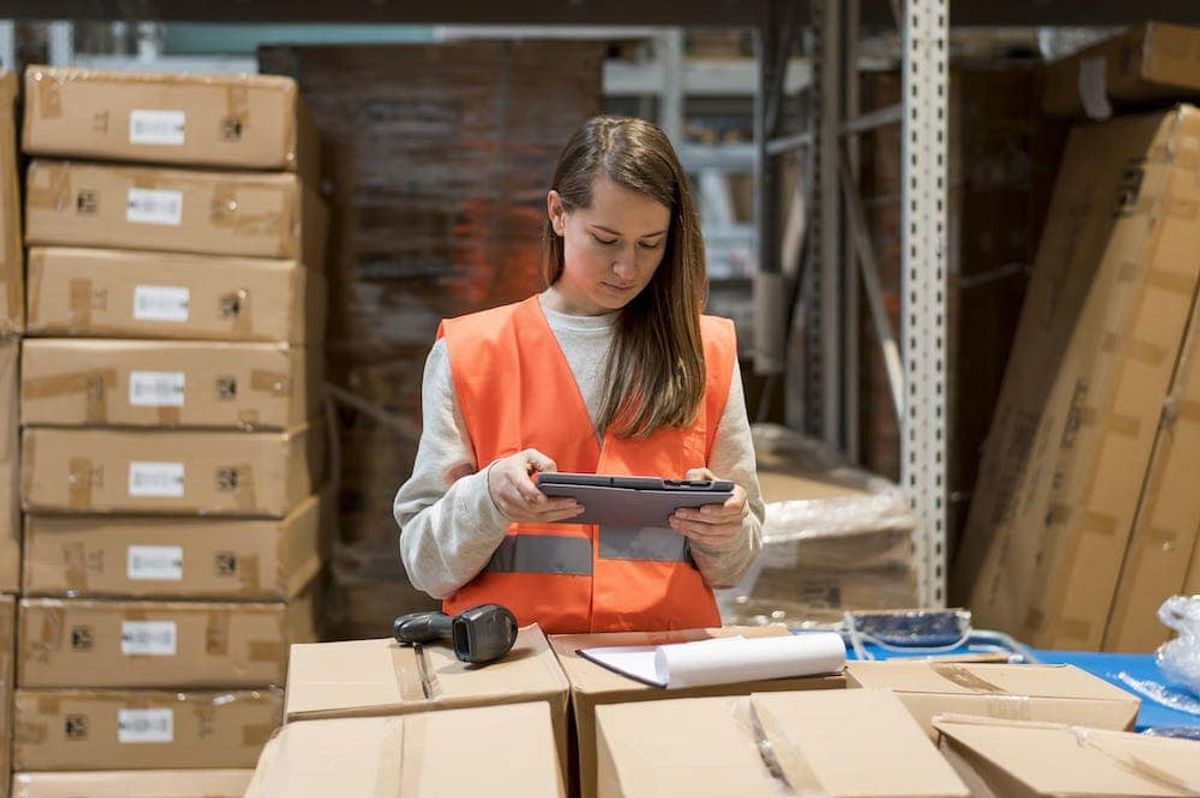
IoT in the warehouse improves energy management
What used to be the motion detector that turned the light on or off is now IoT sensors. These can ensure more efficient use of energy. This can range from the automatic shutdown of lighting in unused rooms to the electrical control of windows or consumers. An automatic switch from energy supply through own photovoltaic on the roof to the local power supplier is already standard in many companies.
Conclusion:
Anyone who wants to optimize processes in the warehouse cannot avoid using modern IoT applications in the warehouse. Without them, it is no longer possible – you would be working like in the Stone Age and thus not competitive. IoT applications ensure more accuracy, more efficiency, and faster processes in many areas of the warehouse. The progress in the area of IoT in the warehouse is so fast and significant that even companies that implemented initial IoT approaches in the warehouse years ago can see significant improvements today, offering further savings and improvement potential.
The experts at SmartMakers are ready to assist anyone who has recognized how important IoT can be for a warehouse company.
Contact us now to make your warehouse processes more efficient.