Leveraging IoT for Advanced Predictive Analytics in the Supply Chain
Leveraging IoT for advanced predictive analytics in the supply chain: forecasting trends, optimizing routes & device maintenance
The Wi-Fi-enabled vacuum cleaner robot from Xiaomi offers a wide range of functions: It reminds you, based on past interactions, when it's time to clean your home, provides tips for component replacement, and warns in advance of upcoming maintenance to avoid potential operational disruptions. This base model is available for around 250 euros and competes directly with devices like the Roomba. The innovative intelligence of this device far exceeds our earlier expectations at the beginning of the millennium and impressively demonstrates the advanced possibilities of IoT technology.
A similar paradigm shapes many areas: algorithms that predict future events and significantly simplify life. In the field of supply chain management, it is no longer sufficient to rely solely on reactive strategies. Being successful requires a predictive approach that identifies both challenges and opportunities early on. The implementation of predictive analytics in supply chain management is crucial. According to a report by MarketsandMarkets, the global market size for predictive analytics is expected to reach $23.9 billion by 2025, with an average annual growth rate of 21.5%.
The current reality shows that AI, IoT, and machine learning are rewriting the rules – we are no longer in the digital age, but in the information age. This is an era where information and data, consisting of bits and bytes at their core, set the tone. In this context, this article examines how the integration of Internet-of-Things (IoT) technology with predictive analytics is reshaping the landscape of supply chain management. By leveraging real-time data and advanced analytics, companies can optimize their operations, reduce costs, and enhance overall efficiency.
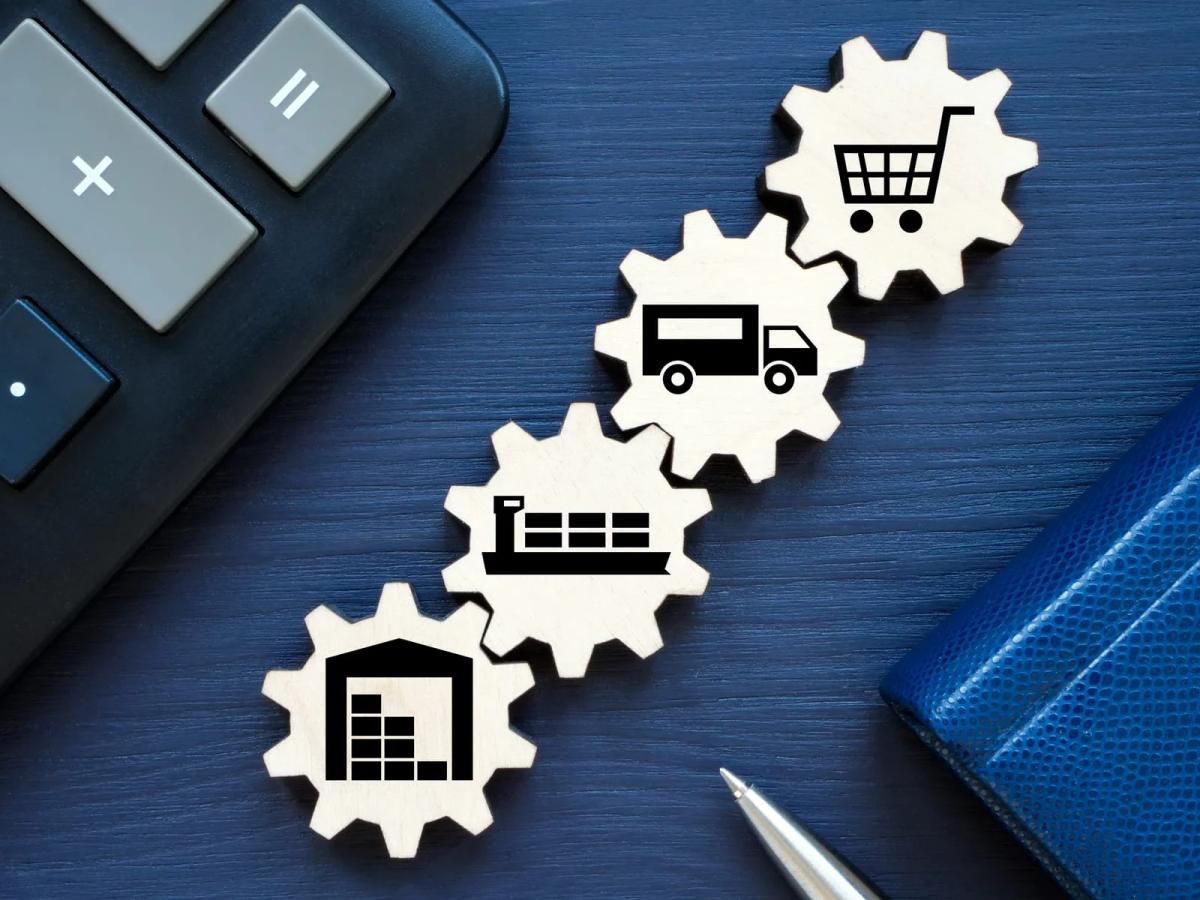
Predictive Analytics and IoT in Supply Chain Management
Predictive analytics plays a central role in forecasting future trends and fine-tuning supply chain processes. In this dynamic environment, proactive thinking and planning are crucial. The multitude of variable and unpredictable factors can quickly disrupt the business world. By strategically using predictive analytics in the supply chain, companies today can gain a strategic advantage.
By intelligently utilizing historical and current data, companies can detect demand fluctuations early, identify potential bottlenecks, and make informed decisions. Another advantage is that companies can not only use their own data but also access data from their competitors and suppliers, especially when similar software solutions and thus data points are used.
According to a study by Deloitte, 65% of supply chain executives consider predictive analytics crucial for the future success of their companies. They are convinced that this digital innovation not only influences the way business is conducted in the future but is already significantly impacting it today. Therefore, the Internet of Things (IoT) has established itself as a fundamental technology that connects physical devices and sensors to collect extensive data along the supply chain. The integration of predictive analytics and IoT represents a powerful synergy that enables companies to gain deep insights and promote operational excellence.
The Rise of Predictive Analytics in the Supply Chain
For many decades and even centuries, companies primarily relied on manual methods and basic statistical techniques to predict how the surrounding ecosystem in which they operated would respond to changes. These methods were labor-intensive and often could not adequately handle the complex dynamics of the supply chain.
With the advent of computers in the second half of the 20th century, this changed fundamentally. Their introduction enabled companies to process large amounts of data and perform complex calculations. Early adopters of systems like Enterprise Resource Planning (ERP) experienced a dramatic increase in the efficiency of their supply chains. In these early years, technologies began to evolve, leading to more precise and granular forecasting models.
The breakthrough in predictive analytics within the supply chain occurred with the convergence of Big Data and the rise of cloud computing, accompanied by the introduction of machine learning algorithms and IoT technology. Within a few years, we have made more progress in supply chain forecasting than in the entire history of mankind before.
What is Predictive Analytics in Supply Chains?
Predictive analytics uses statistical algorithms and machine learning to analyze data and predict future outcomes. These techniques help identify potential disruptions, make proactive decisions, and gain valuable insights into operations.
According to a survey by Forbes Insights and EY, 86% of executives agree that predictive analytics is crucial for their company's future competitiveness.
The Importance of Predictive Analytics for Supply Chain Optimization
Predictive analytics enhances efficiency, transparency, and responsiveness in the supply chain by recognizing patterns, mitigating risks, and optimizing resource allocation. A study by McKinsey & Company, for example, shows that companies using predictive analytics in their supply chains have been able to reduce inventory costs by 15-20%.
How Does Predictive Analytics Work in the Supply Chain?
The Internet of Things (IoT) forms the backbone of predictive analytics, while metaphorically speaking, cloud computing represents its muscles and IoT devices its tendons.
IoT devices and sensors are specifically designed to capture real-time data, forming the basis for precise predictive analytics. This data is transmitted via Wi-Fi or 5G antennas to a cloud computing mainframe, where it is analyzed and interpreted using continuously improved algorithms. The ongoing development of algorithms is crucial for making more accurate predictions and further optimization.
By monitoring key metrics such as inventory levels, transport routes, and device status, IoT enables proactive decisions and optimization of operational processes.

Enhancing Predictive Analytics in the Supply Chain through IoT
Let's now explore how IoT - and predictive analytics for supply chains - can help companies on a practical level.
Demand Forecasting and Inventory Management
The integration of IoT data into predictive models essentially allows companies to accurately forecast demand and optimize their inventory. This can reduce storage costs and minimize stockouts. According to a report by Gartner, it is expected that 50% of the world's leading companies have invested in real-time transportation visibility platforms, leading to an improvement in delivery performance by up to 30%.
Optimizing Route Planning and Delivery Times
The software not only considers internal company data but also a variety of other data points, including data from competitors, suppliers, national weather services, and platforms like Google Maps with their traffic data. Thousands of different data points are analyzed. By evaluating IoT-generated data on transport routes, weather conditions, and traffic patterns, companies can optimize their delivery schedules. This way, they can shorten transit times and increase customer satisfaction. Additionally, this contributes to cost efficiency, as companies can reduce expenses for fuel and other delivery-related costs through proactive planning.
Anticipating Device Failures and Maintenance Needs
According to IBM, predictive maintenance can reduce maintenance costs by up to 25% and unplanned downtime by up to 75%. In supply chains, predictive analytics ultimately uses IoT data to predict device failures and schedule proactive maintenance. This ensures continuous operation and minimizes downtime. As in the example of the Xiaomi vacuum cleaner robot at the beginning of this article, the software - based on industry standards and other statistics - provides indications of when maintenance is required, when a part needs to be replaced, or when a technical upgrade is advisable.
Predictive Analytics in Supply Chains and You
The integration of IoT with predictive analytics in the supply chain offers unprecedented opportunities for optimization and innovation. It enhances competitiveness, makes companies more agile, and keeps them always up to date. This integration helps eliminate redundant processes and enables companies to operate in a dynamic environment, continuously staying at the forefront of change. Given the increasing complexity and interconnectedness of supply chains, the use of predictive analytics based on IoT is crucial. By leveraging this transformative technology, companies can manage uncertainties, seize opportunities, and drive sustainable growth in the digital age. It is time to unlock the potential of IoT for advanced predictive analytics in the supply chain and realize the full potential of future supply chains.