IoT Ecosystem – Explained
Learn all about the IoT ecosystem. From sensors to data analysis - SmartMakers makes complex technologies understandable. Discover more
The Internet of Things (IoT) is indispensable in the modern world, with hardly any medium or large company operating without an IoT ecosystem. But what do IoT ecosystems consist of? What should be considered in planning, and which components are crucial for what the English call an IoT Ecosystem? It is often believed that IoT essentially consists of sensors that determine the location or condition of an object and a software platform that displays it all. But that would be far too short-sighted. To have a functioning IoT ecosystem that brings significant benefits to users, much more is needed. To have such systems that provide tangible advantages and thus also profit, the following is especially needed:
- Tailored solutions for individual cases
- The right components
- The right connections (Connectivity)
- Meaningful IoT platform functions
- Good support during installation and operation
It is not enough to just purchase some sensors or stick RFID chips on pallets and buy standard software, but to build exactly the IoT ecosystem that brings the greatest benefit from networking various information in individual cases, advised by IoT experts.
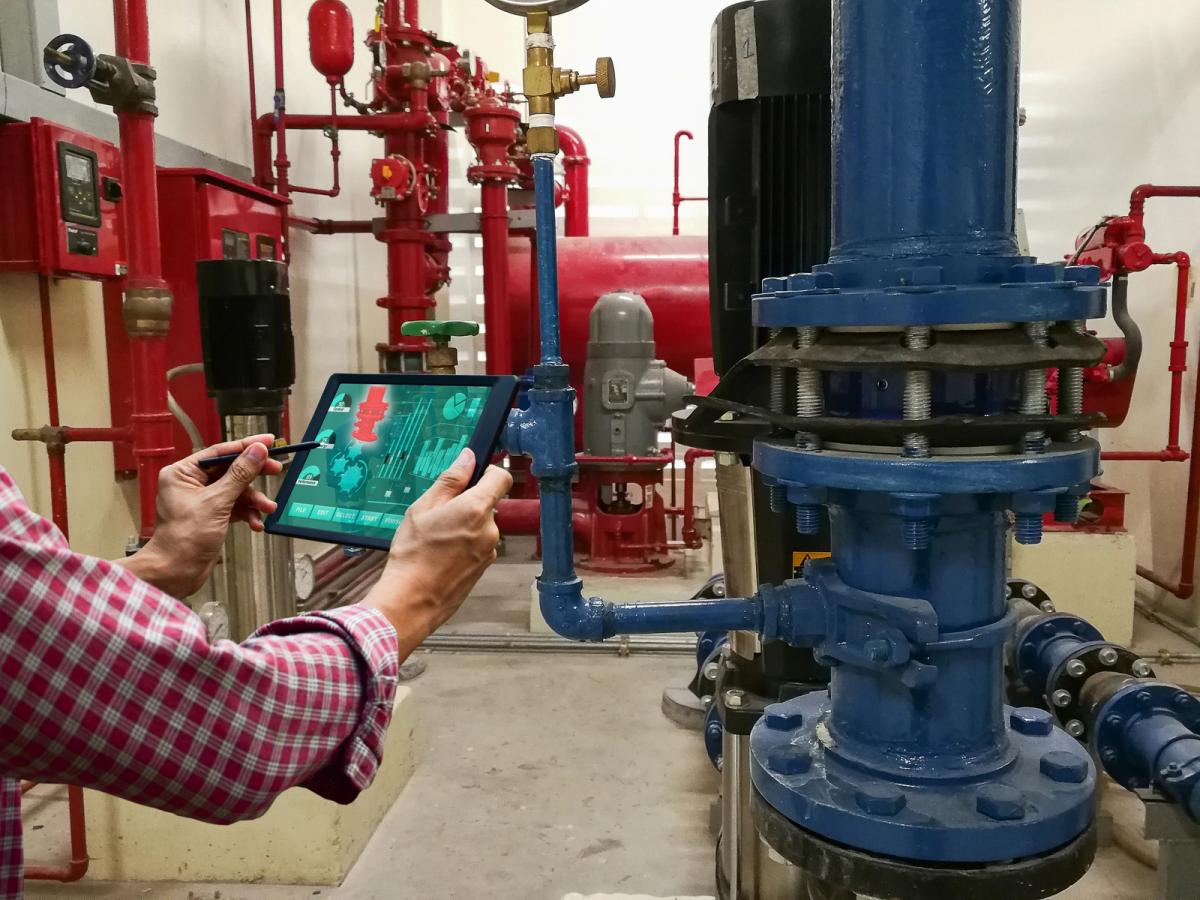
What is an IoT ecosystem anyway?
An IoT ecosystem is ideally a functioning and beneficial interplay of four elements:
1. Devices (“Things”): Sensors are often used here to collect data and report changes. Sensors usually send data to a cloud in the IoT ecosystem. Actuators perform actions after data and commands have been received.
2. Connectivity: The right connectivity enables the exchange of information between the various components, e.g., between sensors and data analysis tools and then back to actuators. Data passes through Gateways to reach the cloud and use network protocols for data transport.
3. In the Cloud data collection and processing take place. The use of high-performance systems is crucial here for real-time processing of large amounts of data. Local data processing can also occur with edge computing.
4. The user interface as a visible component allows the control and visualization of the systems for the user. Today, interaction with an IoT ecosystem is possible not only from stationary devices but also from smartphones or tablets.
In a functioning IoT ecosystem, sensors capture all important data, transmit it via the Internet or other technologies to a computer or the cloud, and it is evaluated there by software so that corresponding commands are automatically executed via actuators. This leads to, for example:
- Better production processes
- Fewer errors
- Elimination of human errors
- Optimization of supply chains
- Increase in sales
- Reduction of production costs
- Increase in quality
Components of IoT ecosystems – what is important?
When assembling components for IoT ecosystems, mistakes are often made. For a perfect IoT system to function, the individual components must be optimally coordinated, and the best solutions for the individual case must be used from a component family. The correct assembly and selection of components, as well as the correct selection and alignment of the software, are essential tasks for the IoT experts at staging-smartmakersio.kinsta.cloud
IoT devices and sensors
There are a variety of IoT devices and IoT sensors. The art lies in finding the right sensors and devices for the right application purpose, which can then unfold the best possible function in the IoT ecosystem. For example:
· Passive RFID chips such as in package labels or department stores for goods security or transport monitoring. Consist of an antenna and a coding
· RFID chips with memory function: More convenient RFID chips not only transmit a fixed ID but can also capture and store data such as humidity, temperature, or pressure – this can be used, for example, to improve material flow in industry
· IoT boards with WLAN module or USB module: When data needs to be transmitted over longer distances and the data structure may be more complex
· IoT boards with mobile connectivity: Wherever mobile connections are available, data can be transmitted over long distances from freely moving objects. This is also possible in the most remote locations using narrowband technologies on an LPWA basis.
Sensors can capture a wide variety of things, for example:
- Temperature sensors
- Humidity sensors
- Pressure sensors
- Level sensors
- Acceleration sensors
- Gas sensors
- Infrared sensors
- Gyroscope sensors
The respective application determines the selection and the technology that should ideally be used.
IoT Connectivity and Communication
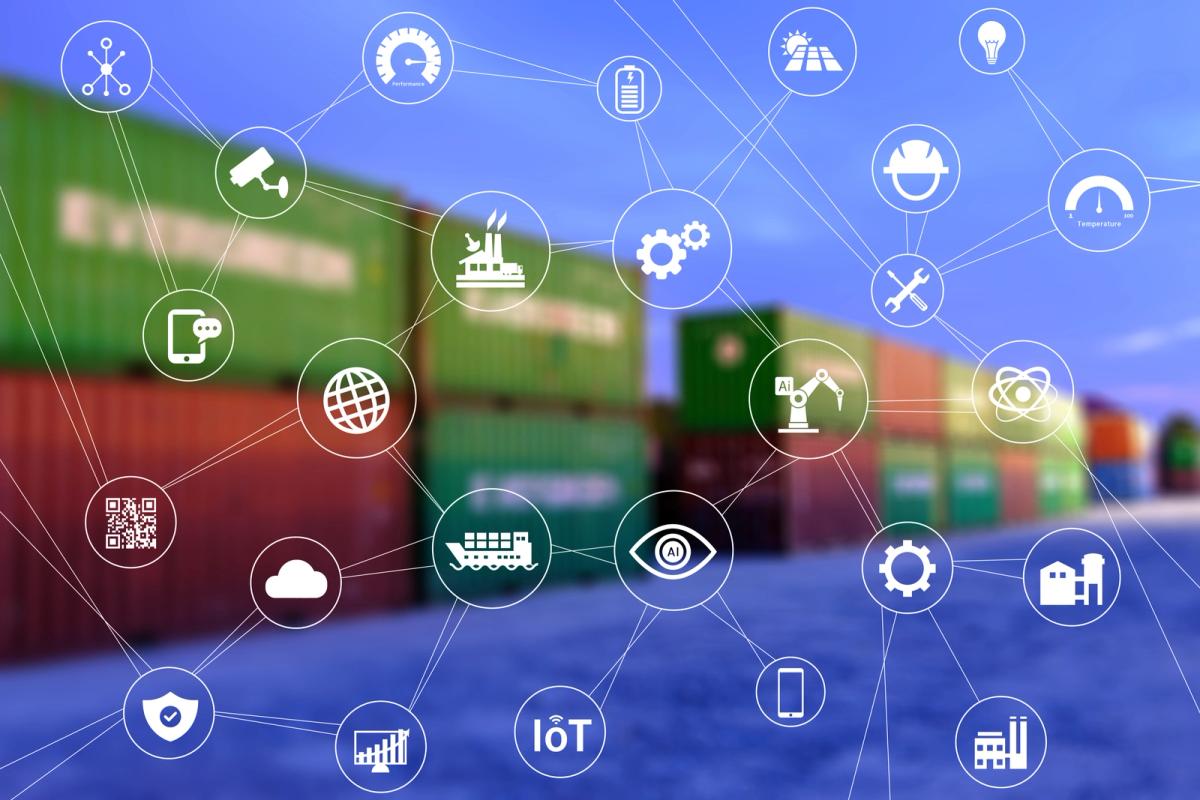
The connection between the individual IoT elements from the smallest sensor through an IoT platform to the large machine controlled by actuators is understood as IoT connectivity. High speeds and the compatibility of different components often pose a challenge for IT administrators. An IoT ecosystem can function well when there is high data throughput with great scalability and only a minimum of latency must be tolerated. Large bandwidths facilitate an IoT ecosystem.
IoT Data Management and Storage
Only from reasonable data management do the clear advantages of an IoT ecosystem arise. In many companies, a large part of the collected data remains unused and does not serve to optimize processes. With software solutions like thingsHub, it is possible to use IoT data for tailored solutions and improvement of processes and sales. Problems can be identified and solved more quickly with proper data management, leading to reduced downtime.
Intelligent IoT Analytics
Only through intelligent IoT analytics do real advantages for the company using IoT technologies emerge from a vast data collection. The data must not only be collected and possibly stored, but the true benefit for a company lies in the evaluation and the conclusions drawn from it. Here, IoT companies differ significantly from each other.
IoT Security and Data Protection
Wherever data is collected, transmitted, and stored, data protection and security concerns must be considered. Collected and transmitted data, as well as stored data, must not fall into unauthorized hands. Modern transmission protocols and data storage methods can achieve the greatest possible security here.
IoT Platforms and Middleware
To establish harmonious communication between all elements in an IoT environment and obtain optimal evaluations, middleware is sometimes required, i.e., software that stands between two systems, and of course, an IoT platform that visualizes the IoT for the user and makes control easy. Solutions like ThingsHub allow access via convenient web interfaces.
Conclusion IoT Ecosystem
To build a perfect IoT ecosystem, you need not only first-class and modern IoT sensors and devices but above all an optimal networking and coordination of the components. Only through the right software, which must be tailored to each individual application, can the greatest possible benefit for the user be achieved, which can be reflected in profitability, quality, and sales. In the 21st century, medium and large companies are hardly conceivable without functioning IoT ecosystems. The data from the IoT ecosystem, when properly coordinated and evaluated in a timely manner, bring real advantages for any company.