IoT in Construction: How Real-Time Monitoring is Changing Special Vehicle Operations
IoT makes construction vehicles safer and more efficient. Real-time monitoring reduces downtime, costs, and boosts productivity.
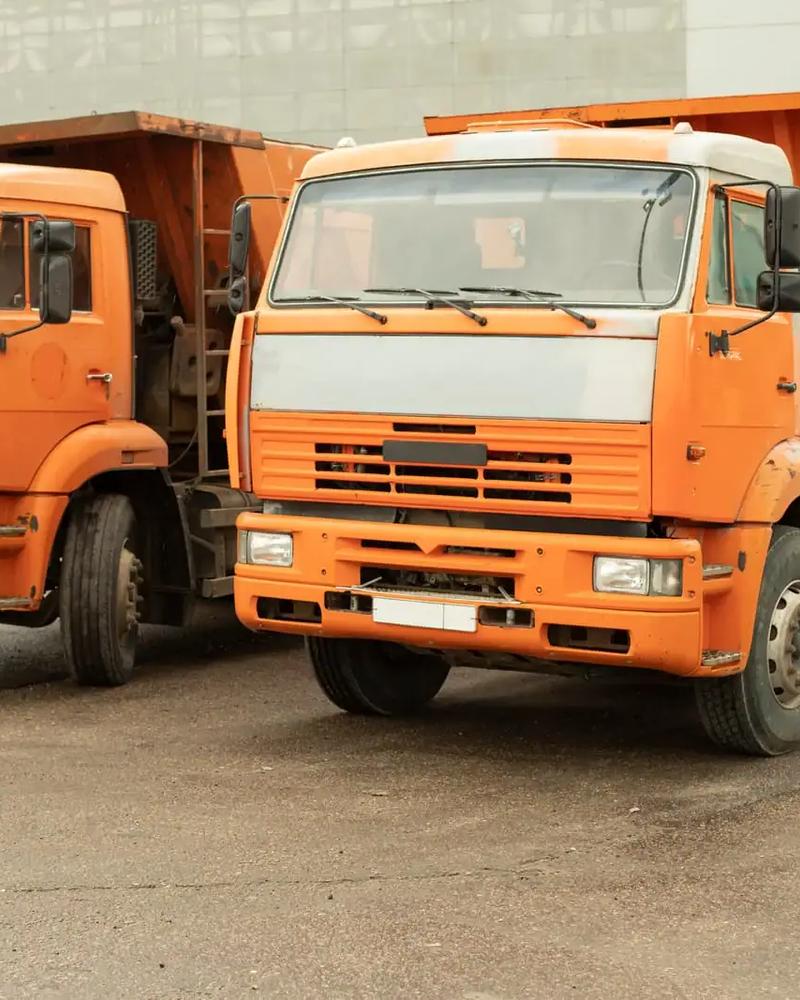
LET'S NOT BEAT AROUND THE BUSH – construction vehicles are expensive, underutilized, and sometimes (unfortunately) driven like bumper cars by overtired operators. And until a few years ago, that was part of the "tax" we had to pay. It was the cost of doing business. Then came AI, IoT, and other cool technologies and BOOM, everything changed. Still skeptical?
A quick statistic to bring you back to reality: construction machinery stands idle more than 35% of the time. That's over a third of your fleet twiddling its mechanical thumbs while still incurring depreciation, insurance, and maintenance costs – it's bordering on sabotage. It's suicide by inactivity.
That's why IoT in the construction industry and its younger, nerdier cousin, IoT in construction, are suddenly all the rage. They're not here to sell you buzzwords, or not just as buzzwords – they're here to trim the fat and improve your profit margin. Hypothesis? Real-time monitoring of special vehicles via IoT is a paradigm shift. Safety improves, efficiency rises, and costs? They start heading in the right direction: down. Now, let's prove this hypothesis and make it a fact.

The Current State of IoT in Construction Vehicle Operations
Slow Development Meets Turning Point
Let's not kid ourselves, IoT in the construction industry hasn't reached technological utopia yet. Most companies are somewhere between "we're thinking about it" and "we installed a GPS Tracker... on an excavator." Everyone knows it exists, but few actually use it – Why? Because, like all paradigm shifts, it sometimes has to disrupt so much that it's almost deadly. It's a sad fact that people only start swimming when they begin to drown.
About 40% of large companies have dipped their toes in. But full fleet integration? That's a small club – invitation only (for now). But the momentum is building. And it's building fast.
What's Actually in Use?
Here's what we're talking about when we mention IoT-enabled construction vehicles. The devices aren't just science fiction gadgets – they're practical, affordable, and more widespread than you'd think:
Wearables/RFID → Pairing operators with approved machines (and no one else)
- Telematics units → Location, speed, fuel consumption, engine diagnostics
- Proximity sensors → to prevent collisions with people or equipment
- Load sensors → to prevent dangerous, process-risky overloads
- Cameras/LIDAR → for visibility and (eventually) autonomous navigation
But It's Not All Sunshine
Of course, it's not all smooth sailing. Let's be honest.
- Older fleets: major compatibility issues
- Construction sites: connectivity black holes
- Operators: wary of Big Brother
- Managers: overwhelmed by data without clear insights
- Finance: asking every five minutes "Where's the ROI?"
Yet, the companies that have persevered are seeing success. The truth is, it's a steep climb, but one that's worth it. You won't see the returns this quarter, and maybe not the next, but in a year? Let's just say your bank account will give you a thumbs up.

Tangible Benefits of Real-Time Vehicle Monitoring
1. Safety: Not Just a Buzzword
Safety is no longer just about hard hats and safety boots.
- Real-time operator monitoring means you're alerted when someone is tired, distracted, or unqualified to operate a bulldozer.
- Dangerous tilt? Poor visibility? Machine stress? The system screams before the accident happens – not after.
- Compliance? Now automated. Logs, checklists, and incident reports that fill themselves out. Imagine that.
- Bottom line: fewer incidents, faster response, better documentation.
2. Efficiency Gains That Really Count
Now we get to the heart of the matter.
- Route optimization reduces wasted time driving in circles (or worse, to the wrong construction site).
- Idle tracking means you know who's burning diesel and who's just burning daylight.
- And yes – theft prevention. Because nothing kills morale like realizing your brand-new excavator is halfway to another state.
It's about working tighter, cleaner, and smarter – And yes, micromanagement is partly involved, but here's the thing – you're not doing it. An AI system takes the whole load.
3. Real Cost Reductions – In Numbers
Here's where the finance department finally stops asking questions.
- Predictive maintenance can cut costs by up to 30%
- Equipment lifespan? Increased by 20-40%
- Insurance discounts? Up to 15% if your equipment can prove it behaves
- ROI? For many companies within 12 months
These are the numbers that justify the costs – and keep accounting off your back.
Implementation Strategies for Construction Companies
Start Small, Win Big
Don't try to sensor everything at once. Take your time. Be smart. Every sensor costs money, and sometimes they cost more than what you're protecting. Not only that, you don't want to overload your system, especially when you're starting to make the transition.
- Step: Choose your guinea pigs – the high-value, high-risk machines
- Step: Test – at a location with reliable connectivity
- Step: Choose a platform – one that communicates with your current ERP/BIM stack
- Step: Expand only when it makes sense
People: The Real Hardware Challenge
Technology is easy. People? Less so. The biggest hurdle you'll face is getting people to adopt the new technology. It's a problem we constantly face.
- Operators need to know you're not spying.
- Training should be short, visual, and repeatable.
- Highlight the benefits – less paperwork, fewer delays, safer machines.
- And yes, maybe throw in an incentive or two.
Measure What Moves the Needle
There's no point in collecting terabytes of data just to let it rot on a server. What should you actually track?
- Downtime per vehicle
- Maintenance events vs. predicted failures
- Fuel consumption
- Operator behavior and compliance
- Recovery rate of stolen assets
The Way Forward
The Way Forward
So what does IoT in the construction industry actually bring you?
- Safety systems that scream before disaster strikes
- Tools that move with purpose, not with rates
- Lower fuel bills, fewer breakdowns
- Asset security on autopilot
- Reports that write themselves
- Data that earns its keep
What's Next?
- Autonomous vehicles (with human support, for now)
- 5G on-site – for those rich real-time data streams
- Blockchain-verified compliance protocols
- Total integration: machines talking to project management tools, scheduling apps, even weather data
Your Move
If your vehicles aren't being tracked in real-time, you're flying blind. And your competition? They're not. They're either reading this article and about to make the move, or worse, they've already done it. What does that mean? If they're saving money, they can pass those savings onto budgets and underbid you. It's that simple. The one who moves faster, wastes fewer calories doing it, and does it smarter is the one who wins the evolution game.