Efficient Yard Management at AGCO Corporation Thanks to IoT
IoT enhances AGCO's yard management with real-time tracking, automatic gate control, and digital overview for increased efficiency.

In today's highly connected industrial environment, yard management has evolved from a manual, time-consuming task to a strategic process supported by smart technologies. At the heart of this transformation is the Internet of Things (IoT) – a network of devices and sensors that can collect and exchange data in real-time. For the global agricultural machinery manufacturer AGCO Corporation, IoT plays a crucial role in optimizing plant operations, reducing costs, and increasing efficiency.
In this article, we show how IoT is transforming yard management at AGCO and why these improvements are crucial not only for internal logistics but also for customer satisfaction and global competitiveness, with an innovative tracking system and what other logistics companies can learn from it.
What is Yard Management and Why is it Important?
Yard Management refers to the control and coordination of vehicles, trailers, equipment, and inventory in the yard area of a production or logistics site. Unlike the warehouse, which is often optimized with modern inventory management systems, the yard has long been technically neglected. However, inefficiencies here can lead to delivery delays, higher personnel costs, and a lack of transparency in the supply chain.
This is where IoT comes in – it enables real-time monitoring and control, automates routine tasks, and integrates the yard into the entire logistics system.
AGCO Corporation: A Brief Overview
AGCO Corporation is a global manufacturer and distributor of agricultural machinery. With brands like Massey Ferguson, Fendt, and Valtra, AGCO operates numerous production facilities and logistics centers around the world. The company consistently focuses on innovation and precision agriculture, using new technologies to improve its processes.
As part of this digital transformation, AGCO recognized yard management as a critical area for efficiency improvement – especially at large production sites where hundreds of trailers, tractors, and deliveries are handled daily.

The Challenge: Managing Complexity on a Large Scale
Before the introduction of IoT-based solutions, yard management at AGCO relied heavily on manual processes – with checklists, radios, and paper forms. Employees had to manually locate equipment, check trailer contents, and communicate with dock workers to assign parking spaces. This led to:
- Time loss in locating trailers
- Congestion during peak times
- Communication delays between departments
- Difficulties in tracking dwell times
- Higher labor costs and safety risks
This outdated system was no longer up to the demands of modern manufacturing – especially not at AGCO's global scale.

The IoT Solution: Real-Time Data and Intelligent Control
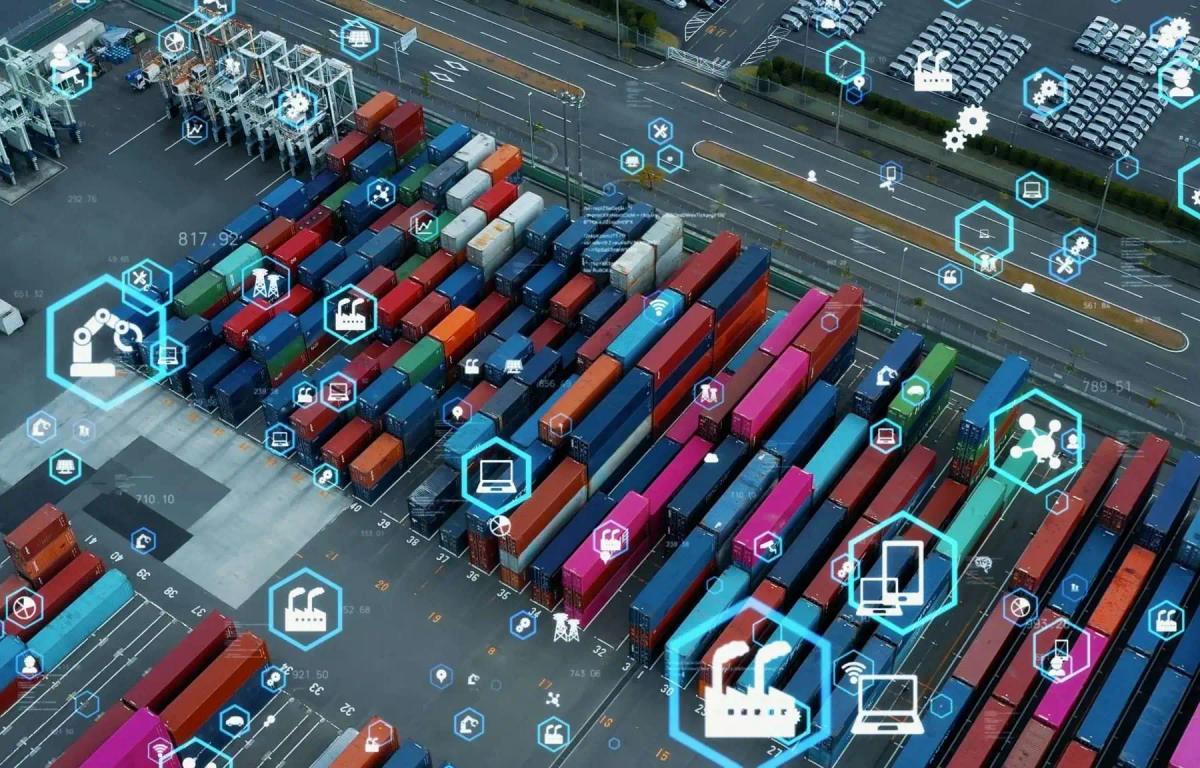
To address these issues, AGCO implemented an IoT-based yard management system that connects GPS devices, RFID tags, sensors, and digital dashboards to enable seamless real-time monitoring.
Key Improvements:
1. Trailer Tracking
Every trailer or vehicle in the yard is equipped with a GPS sensor. These sensors continuously send location data to a central system, enabling immediate localization. Manual searching is completely eliminated.
2. Gate Automation
IoT-enabled access gates facilitate entry and exit. RFID readers automatically capture incoming trailers, document arrival times, and assign parking zones. This speeds up processes and reduces congestion.
3. Digital Yard Maps
A digital representation of the yard shows the positions of trailers, dock doors, and available spaces in real-time. Yard managers can flexibly assign tasks and optimize traffic flow.
4. Data Analysis
All movements are logged and analyzed. This allows bottlenecks to be identified, dwell times to be optimized, and personnel and time planning to be improved.
5. Mobile Use
Yard employees receive information via mobile devices, can report status changes, and receive alerts – improving communication and reducing paperwork.
AGCO 3400 Plant: A Success Story
A particularly successful example of the effective use of IoT in yard management is the AGCO 3400 plant, where many of the new technologies were first implemented and then scaled.
Before digitization, the plant regularly struggled with delays due to lack of oversight and inefficient communication. After the introduction of the IoT system, the following successes were achieved:
- 30% shorter average trailer dwell times
- Higher utilization and faster processing
- Improved delivery punctuality
- Fewer safety incidents in the yard
- Live metrics for performance monitoring
These improvements not only reduced costs but also enabled more timely delivery to dealers and customers worldwide.
More Than Just Efficiency: Strategic Advantages for AGCO
The IoT-based optimization of yard management is more than just an efficiency project for AGCO – it is a strategic competitive advantage. Why?
More Transparency in the Supply Chain
Data from the yard flows into the overarching logistics system, improving planning, partner communication, and responses to disruptions.
Sustainability
Less idle time, lower energy consumption, and reduced manual processes decrease the ecological footprint – an important step towards AGCO's ESG goals.
Scalability
The successful pilot project at the AGCO 3400 site serves as a template for other plants – proof of the scalability of IoT solutions.
Better Customer Experience
More reliable deliveries increase customer satisfaction. Dealers receive their products on time, farmers can deploy their machines punctually – and trust in the brand grows.