Apple AirTag vs. GPS-Tracker: Which is Right for You?
Differenciation Apple AirTags & GPS trackers ✓ advantages & disadvantages ✓ factors for decision ✓ get the complete guide!
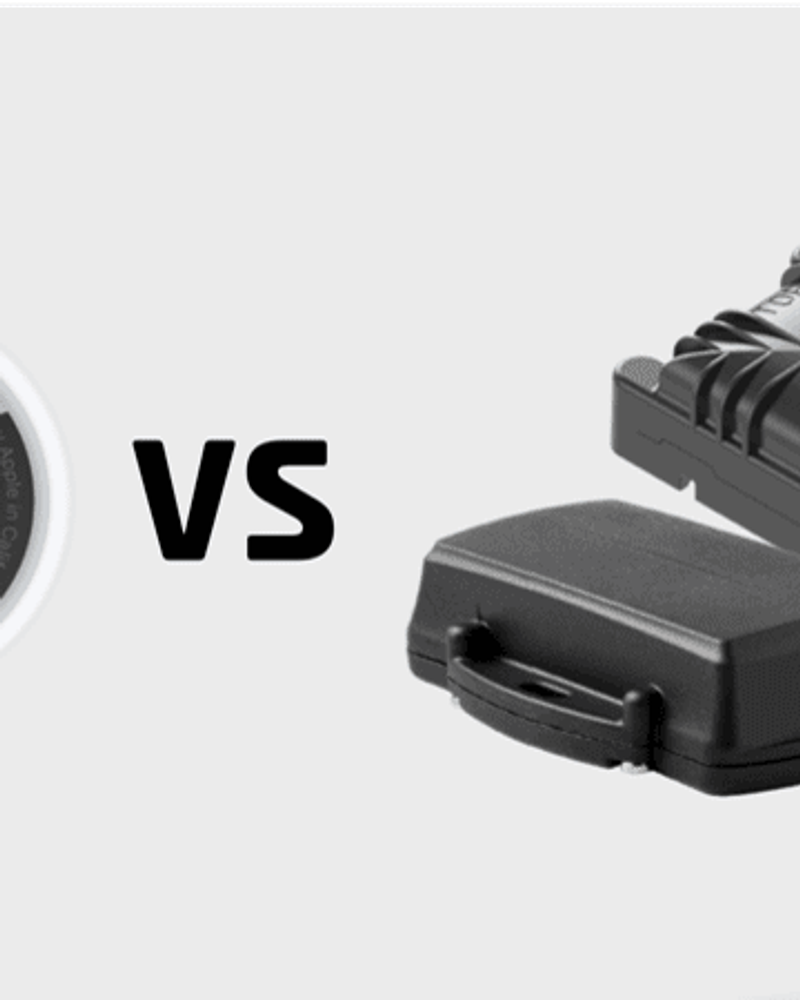
Protect yourself and your company's assets! Today, there are many different technical devices on the market that can help us. But which one is right for you and meets your requirements? An Apple AirTag or a GPS-Tracker? In this article, we compare Apple AirTags and GPS-Trackers and show you the advantages and disadvantages of both devices.
What are the main features of the two devices?
The Apple AirTag is a small, lightweight tracking device that can be used to track items. It is controlled via an app on the iPhone and is connected to Apple technology. With the AirTag, you can see on a map where your items are located. You can also be notified if the device is outside the area you have set.
A GPS-Tracker is a device that allows objects or people to be tracked and their position determined using satellite data. There are different types of GPS-Trackers that can be used for various purposes. Some can be used for tracking and monitoring vehicles or cargo carriers, while others are suitable for tracking people or items.
How do Apple AirTags work?
Apple AirTags are round trackers that connect to your iPhone or iPad and allow you to find your device even when it is within Bluetooth range (about 10 meters) of a compatible Apple device. The tags work with new software called “Apple Tag,” which is loaded onto your device. The software collects data about your device's movements and synchronizes this data with the tracking device. This way, you can see where your object has moved recently. Once an iPhone is near an AirTag, the position of the item tagged with the AirTag is updated.
How do GPS-Trackers work?
GPS-Trackers are devices that use GPS signals or Wi-Fi to determine the precise position of an object indoors or outdoors. Most GPS-Trackers have a built-in GPS module that determines the device's position in real-time and sends it to a central server. This server can then be accessed by a user to display the device's position.
Applications of Apple AirTags
Apple AirTags offer an excellent way to occasionally monitor and track valuable items. The app shows you the exact position of the AirTags on a map. Through Apple's “Find My” app, the owner can be quickly located in case of loss. This is particularly useful for people who carry many easily lost items, such as backpacks, car keys, or keychains. AirTags also allow you to keep an eye on your items at all times by retrieving their location on your Apple device.
Applications of GPS-Trackers
GPS-Trackers are devices that can track the position of an object. They are often used to locate vehicles or warehouse goods. But other assets like containers can also be located using GPS-Trackers. Often it is for companies and individuals very difficult to track objects, especially when they are in motion. By using the trackers, such valuable items can be easily tracked. A tracker can monitor the driving behavior or position of a vehicle, making potential theft easily detectable. GPS-Trackers also allow the owner to track the location of the vehicle anytime and anywhere.

What do Apple AirTags and GPS-Trackers have in common?
The two devices have many similarities. Both are handy and easy to use and operate in similar ways. Both devices send their location data via Bluetooth or Wi-Fi to a receiver, which determines your position based on this data.
What are the differences between Apple AirTags and GPS-Trackers?
The main differences between Apple AirTags and GPS-Trackers lie in the technology and functionality. GPS-Trackers can be tracked over longer distances and offer more precise positioning than AirTags. They can also be equipped with additional features such as alarms and geofencing.
Apple AirTags offer many applications and a user-friendly interface. The advantage of the GPS-Tracker lies in its versatility, as there are many different types of trackers on the market.
The advantages and disadvantages of an Apple AirTag
Advantages
- Small and handy. Fits comfortably in your pocket or on your keychain and is always within reach.
- Very easy to use. Once connected to the iPhone or iPad, it can be used.
- The battery of the tracker lasts very long. You don't have to charge it constantly and can use it without worry.
- Waterproof.
Disadvantages:
- The tracker only works with iOS. If no Apple device is used, the AirTag cannot be used.
- Limited to Bluetooth signals and the network of nearby Apple devices, which can make the tracker ineffective in less densely populated rural areas.
- No continuous real-time tracking.
- No automatic location and response when the item moves. Therefore, the owner does not receive a notification as soon as the object is stolen.
- Ineffective in tracking precise routes due to lack of GPS antenna
The advantages and disadvantages of a GPS-Tracker compared to the Apple AirTag
Advantages
- Different models available for different applications.
- Tracking possible anywhere, regardless of the location of the tracked object.
- Real-time tracking possible.
- Condition monitoring through sensors possible.
- Responds with alerts or alarms when the object is moved or stolen.
- Depending on the design, more robust than an Apple AirTag.
- Uses technology that reduces unnecessary battery consumption and allows for a battery life of several years.
Disadvantages
- Ongoing costs due to SIM connectivity and IoT platform
- More expensive to purchase
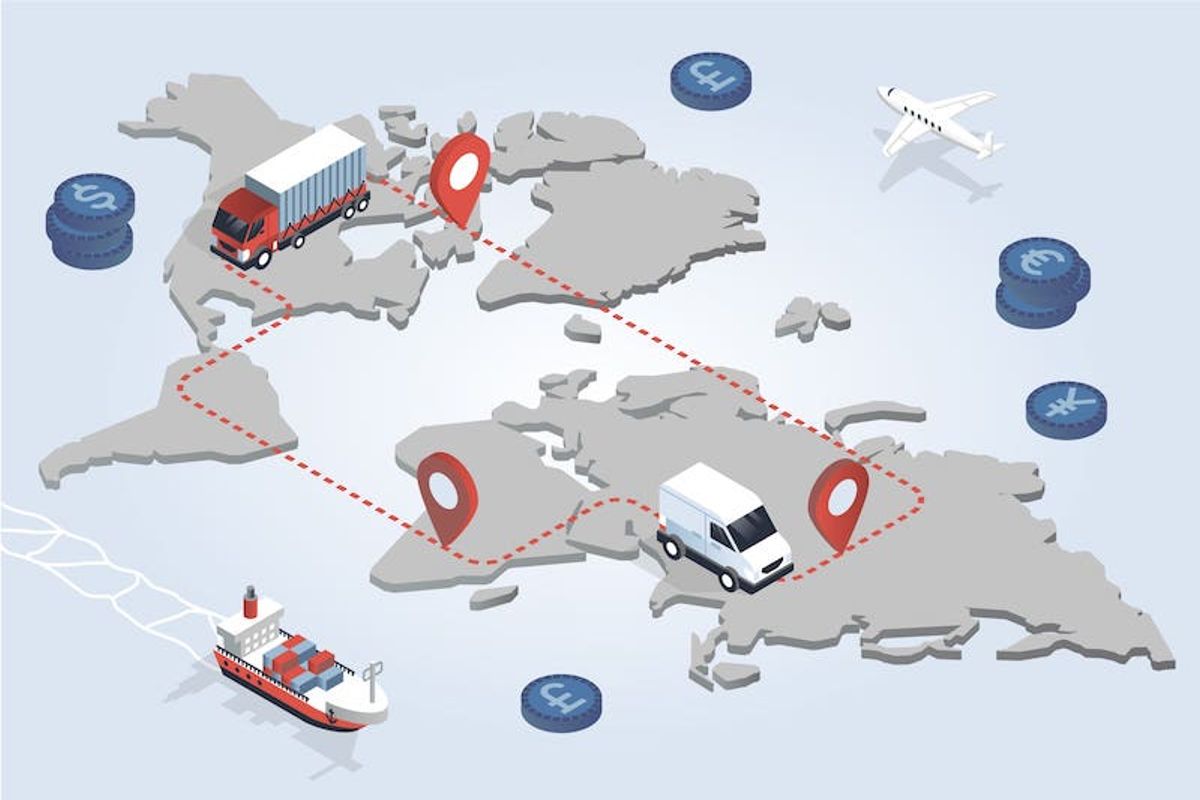
How do you decide which type of tracking device you need? What factors should be considered?
Here are some factors to consider when deciding which type of tracking device you need:
- Purpose: For what purpose do you need a tracking device? Do you want to track your containers (KLT / SLT), vehicles, or machines? Depending on what you want to use the tracking device for, you need to choose a device with the appropriate features.
- Price: Tracking devices can vary greatly in price. Therefore, it is important to set a budget before deciding on a device.
- Features: Some tracking devices offer more features than others, such as real-time tracking, alarms, and geofencing. Consider which features are important to you before deciding on a device.
- Size and weight: Some tracking devices are larger and heavier than others. Depending on where the tracking device is to be attached to the asset, a lightweight or compact device must be chosen.
- Battery life: The battery life of tracking devices can vary greatly. Consider how often you want to use the tracking device and how long the battery life should be.
- Compatibility: Some tracking devices are only compatible with certain devices or systems. Check if the tracking device you are considering is compatible with your devices and your company's systems.
Once you have considered these factors, you can start comparing tracking devices and find the one that best suits your needs.
Conclusion
The decision on which device is right for you depends on your individual needs and requirements. If you are looking for a tracking device that allows you to easily find lost items such as wallets, keys, or backpacks, the AirTag is a good choice. However, note that unlike other trackers, it can only transmit the location when an Apple device is nearby. If you are looking for a device for tracking objects that move a lot, are far away, or need to be located frequently, such as vehicles or transport containers, a GPS-Tracker with real-time tracking, monitoring functions, and a long battery life is the more suitable choice.
Are you still unsure which device is right for your application? Contact us today and let us help you find the right solution with the right device for your needs.