How LPWAN is Changing the Internet of Things (IoT)
Learn how LPWAN revolutionizes IoT and offers cost-effective, energy-efficient solutions for large-scale IoT implementations.
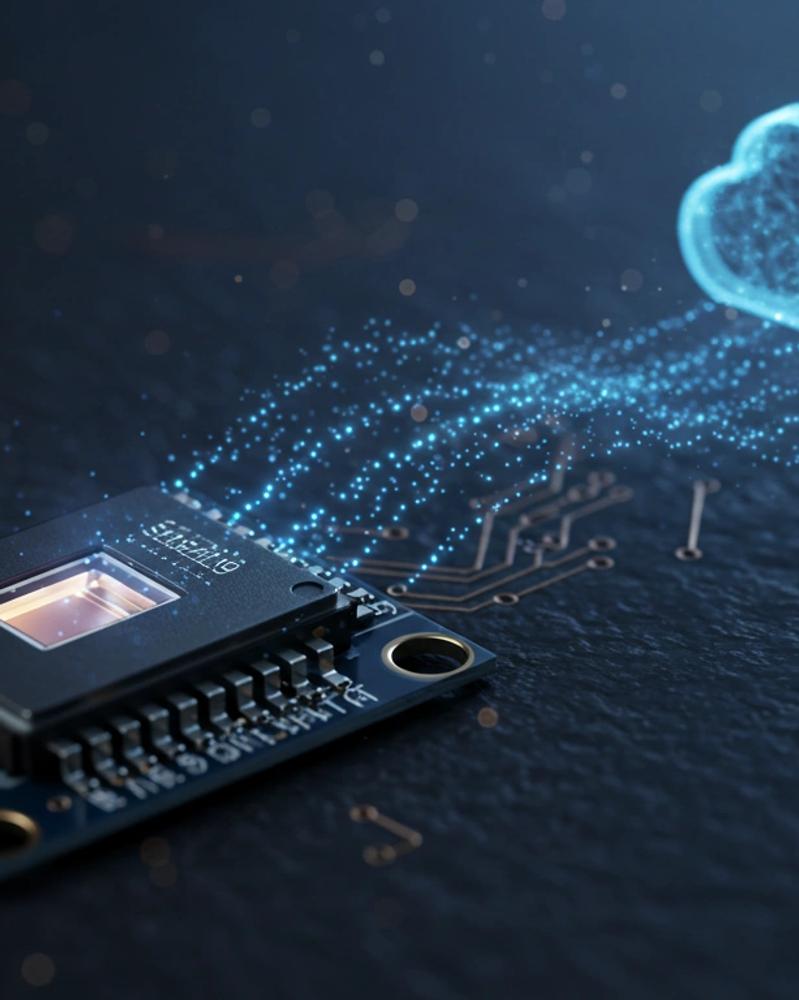
The Internet of Things (IoT) is increasingly revolutionizing the way companies and industries operate – from smart cities and homes to agriculture, healthcare, and logistics. With the rapid expansion of IoT networks, the demand for communication solutions that are efficient, scalable, and cost-effective is rising. This is where Low Power Wide Area Network (LPWAN) comes into play. LPWAN addresses the connectivity challenges of large device landscapes over long distances – while maintaining minimal energy consumption – making it a key factor for the future of IoT.
In this article, we explore how LPWAN significantly shapes IoT. We explain the key features of the technology, differentiate between LPWAN in general and the widely used variant LoRaWAN, and demonstrate how real-world use cases benefit from this development. Additionally, we look at the advantages of LPWAN for large-scale IoT implementations across various industries.
What is LPWAN and why is it important?
The key characteristics of LPWAN
LPWAN – short for Low Power Wide Area Network – is a wireless communication technology specifically designed for long ranges and low energy consumption. Its most notable features include:
- Energy efficiency: LPWAN devices require very little energy, allowing them to often operate for years on a single battery.
- Wide coverage: The networks enable connectivity over long distances – ideal for rural or hard-to-reach areas where traditional radio technologies fail.
- Cost-effectiveness: LPWAN is particularly economical and is excellently suited for large-scale use in IoT applications.
How LPWAN differs from other radio technologies
Compared to other wireless technologies such as Wi-Fi, Bluetooth, or cellular networks, which are designed for fast data transmission over relatively short ranges, LPWAN focuses on other strengths. While Wi-Fi and Bluetooth play to their advantages in homes and office environments, they quickly reach their limits in large-scale IoT applications in remote areas.
LPWAN, on the other hand, was developed for scenarios where low data rates, long ranges, and low energy consumption are crucial – such as with environmental or asset sensors, which only sporadically send small data packets.
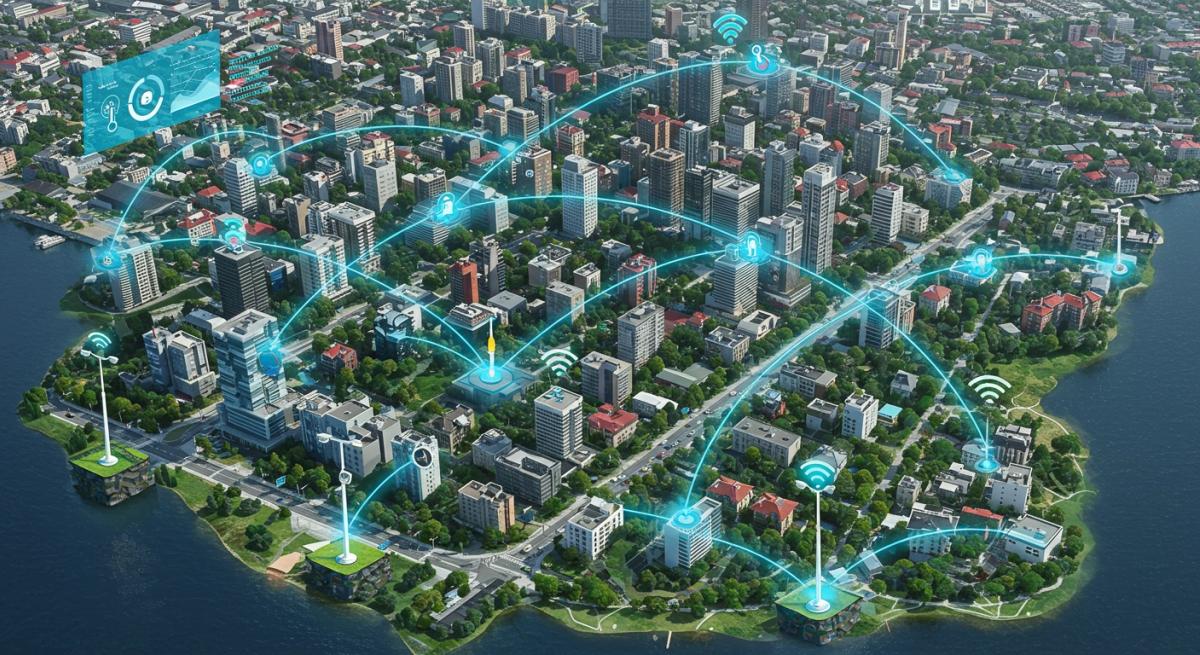
LPWAN vs LoRaWAN: A closer look
What exactly is LoRaWAN?
LoRaWAN is a specific implementation within the LPWAN ecosystem. It is based on the so-called LoRa modulation technology (Long Range) and enables wireless communication over long distances. As one of the most widespread LPWAN technologies, LoRaWAN is prominent but by no means the only option – other protocols within the LPWAN category offer specific advantages.
The essential differences
Although both LPWAN and LoRaWAN enable long-range, energy-efficient communication, they differ in infrastructure and application scope:
- Umbrella term vs. specification: While LPWAN represents the technological umbrella term, LoRaWAN is a specific implementation based on LoRa radio.
- Standardization: LoRaWAN uses a standardized, open protocol that enables broad device and platform compatibility. Other LPWAN variants sometimes rely on proprietary solutions.
- Application specifics: LoRaWAN is excellently suited for applications such as smart farming, environmental monitoring, or mobile asset management. Other LPWAN alternatives may be better suited for higher data rates or direct integration with cellular networks.
Depending on the application, each of these technologies offers specific strengths – the right choice for the respective use case is crucial.
How LPWAN devices enable IoT networking
The role of LPWAN devices
Devices such as sensors, trackers, and actuators form the backbone of modern IoT networks – and this is where LPWAN comes into play. These devices use LPWAN technologies to reliably send and receive data – often for years with minimal maintenance.
A typical example: In agriculture, LPWAN-connected soil sensors measure moisture over large areas and transmit the data to central platforms, allowing farmers to irrigate precisely. In logistics, LPWAN-based trackers enable continuous monitoring of goods flows – even across national borders.
Application examples for LPWAN devices
- Environmental monitoring: Sensors for measuring air quality, temperature, and humidity that cyclically send data to central systems.
- Smart farming: Devices for monitoring soil moisture, plant condition, or animal movements in real-time.
- Asset Tracking: GPS-enabled units for tracking goods, vehicles, or machines over long distances.
Such devices must be robust, affordable, and particularly energy-efficient – qualities that LPWAN optimally fulfills. This makes the technology the ideal building block for connected applications in various industries.
LPWAN Gateways: The link to the cloud
What are LPWAN Gateways?
LPWAN Gateways act as a central interface between IoT end devices and the cloud. They receive data from connected sensors and forward it bundled to higher-level platforms. In this way, they enable an energy-efficient, scalable overall system – without each individual device needing its own internet connection.
How gateways work
At its core, gateways perform a simple but essential task: They capture the data sent by LPWAN devices and reliably transmit it to cloud-based applications. Many gateways support various protocols and can be flexibly integrated into existing IT landscapes.
They enable large IoT networks to be expanded efficiently without each device requiring its own communication infrastructure. This saves costs and significantly reduces maintenance efforts.
The key advantages of LPWAN in IoT
Large-scale coverage
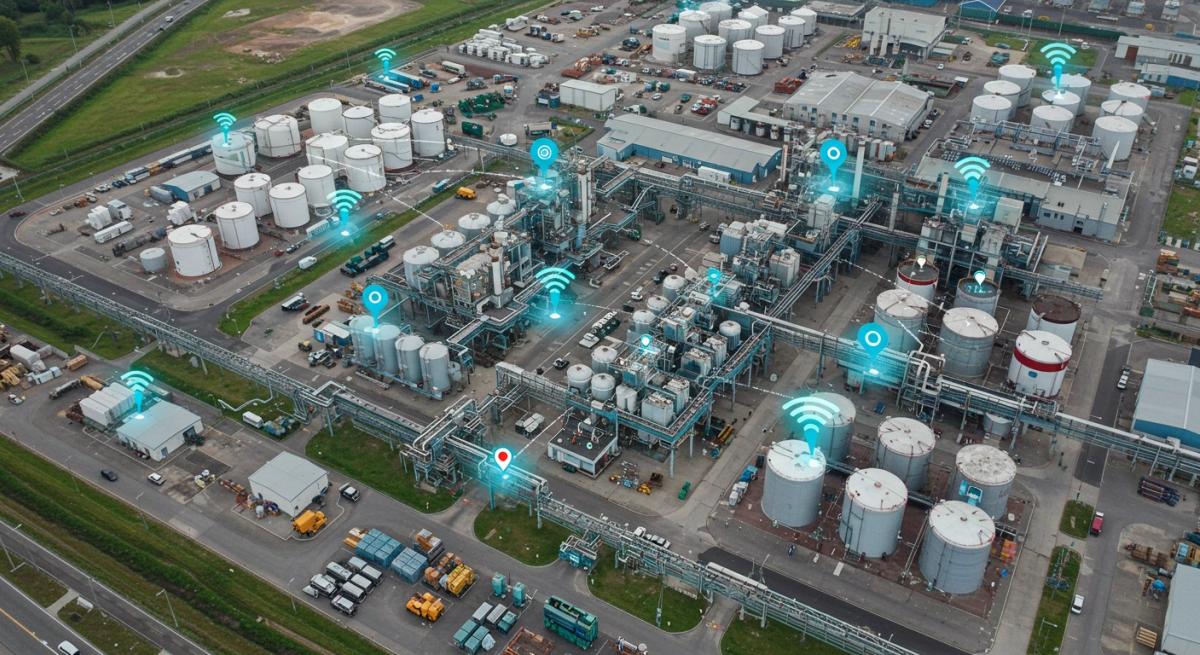
LPWAN networks provide stable connectivity over distances where other technologies reach their limits – such as on offshore platforms, remote farms, or in rural healthcare. They create the conditions for comprehensive IoT solutions even outside urban areas.
Energy efficiency
A key advantage: LPWAN devices can operate with minimal power consumption – often for months or years on a single battery. This reduces maintenance cycles and enables IoT scenarios in locations where frequent battery replacement would not be practical.
Scalability
The technology is ideally suited for integrating thousands of devices into a common network – without requiring large investments in additional infrastructure. This is a crucial factor, especially for applications in smart cities, industry, or environmental monitoring.
Economy
Since both the infrastructure and the end devices are relatively inexpensive, large-scale IoT projects can be realized with LPWAN – at significantly lower overall costs than with other technologies.
LPWAN – Pioneer of a connected future
LPWAN has established itself as a true game-changer for the Internet of Things. With its combination of long range, low energy consumption, and manageable costs, it forms the foundation for scalable IoT infrastructures.
Whether in smart agriculture, logistics, healthcare, or smart cities – LPWAN enables applications that were previously economically or technically unfeasible. In an increasingly connected world, this technology thus represents an essential building block for sustainable digitization.
Conclusion – Key insights at a glance:
- LPWAN offers energy-efficient, long-range communication for IoT devices and is predestined for large-scale implementations.
- The difference between LPWAN and LoRaWAN lies in the specification and protocol structure – LoRaWAN is a popular, open LPWAN protocol.
- LPWAN devices enable diverse IoT scenarios – from environmental monitoring to asset tracking.
- LPWAN Gateways connect devices to the cloud and form the technological backbone of scalable IoT solutions.
- With its combination of scalability, cost efficiency, and energy savings, LPWAN remains a central driver of innovation for the future of the Internet of Things.
Would you like to leverage the benefits of LP for your company? We are happy to provide free and non-binding advice!