Revealing the Potential of IoT in Revolutionizing Manufacturing Workplaces
Transform your production lines with IoT. Discover the potential of cutting-edge technology in production environments with.

In the distant past, when humans began to master fire, the transformative power of technology to improve daily life and production processes was revealed. Suddenly, the preparation and distribution of food became effortless. Then came the wheel, followed by gears, ladders, pulley systems, and so on.
Over time, people realized that technology was the secret ingredient for a more efficient and prosperous life. It acted as a catalyst for solving many problems – problems that have now been successfully overcome.
In the current era, the manufacturing industry, the backbone of global economic systems, faces various challenges regarding efficiency, safety, and sustainability. Against this backdrop, technology once again emerges as a beacon of hope.
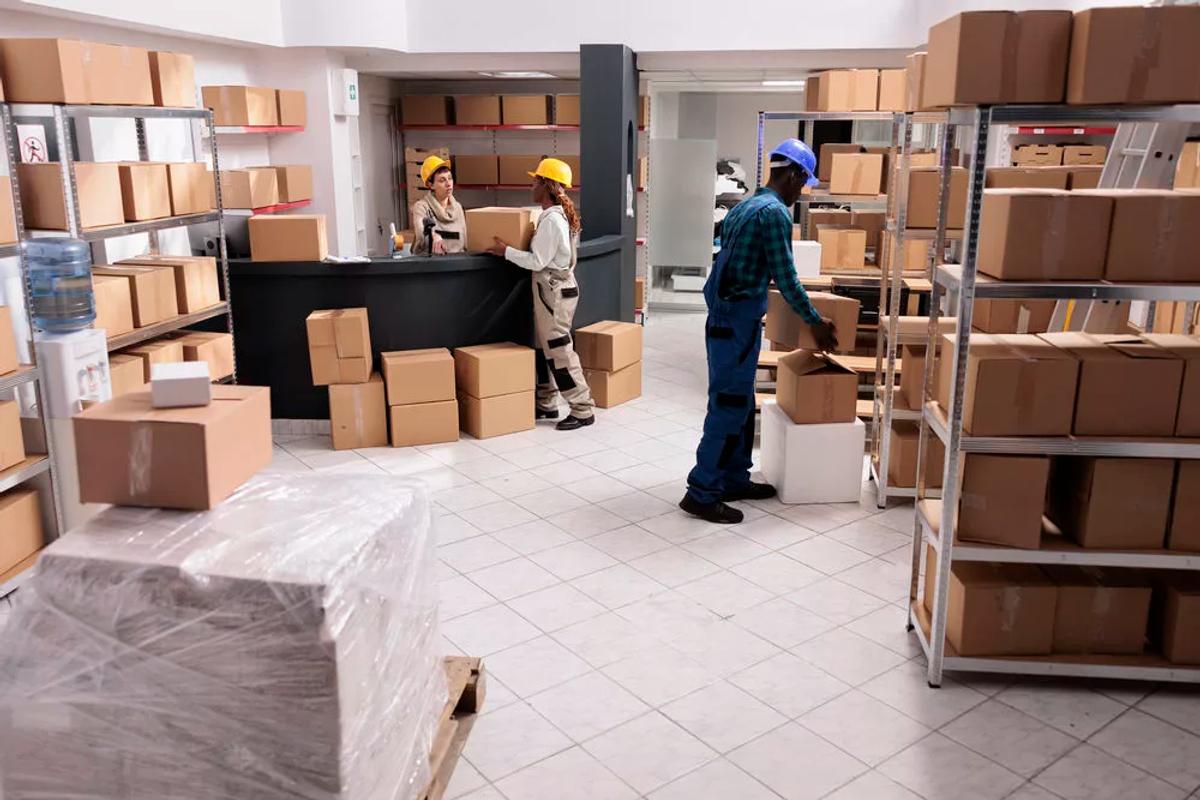
In the last decade, a groundbreaking approach has emerged in the form of the Internet of Things (IoT). This revolutionary technology is on the verge of revitalizing manufacturing workplaces by reshaping their tasks and possibilities.
The global IoT market in the manufacturing sector is expected to grow to an impressive USD 1,829.21 billion by 2032, with a robust compound annual growth rate (CAGR) of 24.70% from 2023 to 2032. IoT has not just come to stay; it has come to change everything you know about manufacturing work.
Companies are therefore faced with the choice of joining this development and leveraging progress or confronting the crippling reality of being overtaken by the competition. A closer look at IoT in the workplace is worthwhile.
The history of the evolution of the manufacturing industry and technology
The evolution of the manufacturing industry in the wake of technological advancements represents a fascinating saga that dates back to when humans abandoned their nomadic lifestyle and settled in one place. This story is characterized by a series of advanced milestones that have redefined production processes and capacities.
We now stand on the brink of a new revolution that has led us on a transformative journey through automated machines. In 2023, we are only seeing the tip of the iceberg of this development. Automated machines represent a crucial advancement that frees manufacturing from labor-intensive methods and ushers in an era of increased efficiency and production. It is, in a way, the Industrial Revolution 2.0 – with significantly more computing power and less steam.
A development that many consider a turning point is the integration of computer-aided design - CAD. This small advancement in software technology revolutionized the design and development phase in almost every way. CAD equipped manufacturers with precise digital tools that enabled them to conceptualize complex designs and refine them with unprecedented accuracy, significantly accelerating the product development cycle.
In parallel, 3D printing took the stage and revealed its fascinating potential. Yet even today, this is only the tip of the iceberg.

The subsequent era of robotics and automation once again shaped the image of the manufacturing landscape. A paradigm shift was initiated on the assembly lines – leveraging robotic precision and efficiency to handle repetitive tasks with unparalleled consistency. Machines were seamlessly integrated into the production process, working side by side with human colleagues to enhance productivity and quality standards.
But now, in the 21st century, we have more sophisticated tools at our disposal – machine learning, automation, artificial intelligence, and the Internet of Things (IoT). Of all these, IoT in the workplace is the most significant and profound, as it forms the heart of all others.
This groundbreaking integration marks a crucial point where connected devices and intelligent sensors come together to create a seamless network of data exchange. IoT heralds an era where devices communicate, share information, and work in harmony, thus opening up a new dimension of smart manufacturing.
Let's now look at some of the milestones that have led us to this point:
- 1784: The adoption of the Spinning Jenny marks the beginning of the Industrial Revolution and leads to the mechanization of textile production.
- 1960s: The introduction of automated machines revolutionizes manufacturing and streamlines production processes.
- 1980s: The integration of computer-aided design - CAD - transforms product development and enhances precision and design capabilities.
- 2000s: Robotics and automation redefine assembly lines and enhance productivity and quality standards.
- 2010s: The introduction of IoT technologies introduces connected devices and marks the beginning of smart manufacturing and Industry 4.0.
Understanding IoT in the workplace
Did you know that your Roomba, your smart toaster, and even your blender store data? All devices in your home that use Wi-Fi to communicate store, share, and analyze data. They are part of the much-discussed Internet of Things revolution, commonly abbreviated as IoT. It is a sophisticated network that connects a variety of devices with sensors and advanced software.
Reports indicate that North America leads as the largest market for IoT in the manufacturing sector, closely followed by Europe and the Asia-Pacific region.
The field of predictive maintenance proves to be the largest application area of IoT in manufacturing, followed by Asset Tracking and Supply Chain Management. Additionally, the software segment represents the highest revenue-generating segment of the IoT market in the manufacturing industry, while the services segment is the most dynamic in growth.
The role of IoT in the workplace
In the dynamic and fast-paced environment of manufacturing workplaces, the Internet of Things (IoT) has rapidly gained significance as a major catalyst for profound changes:
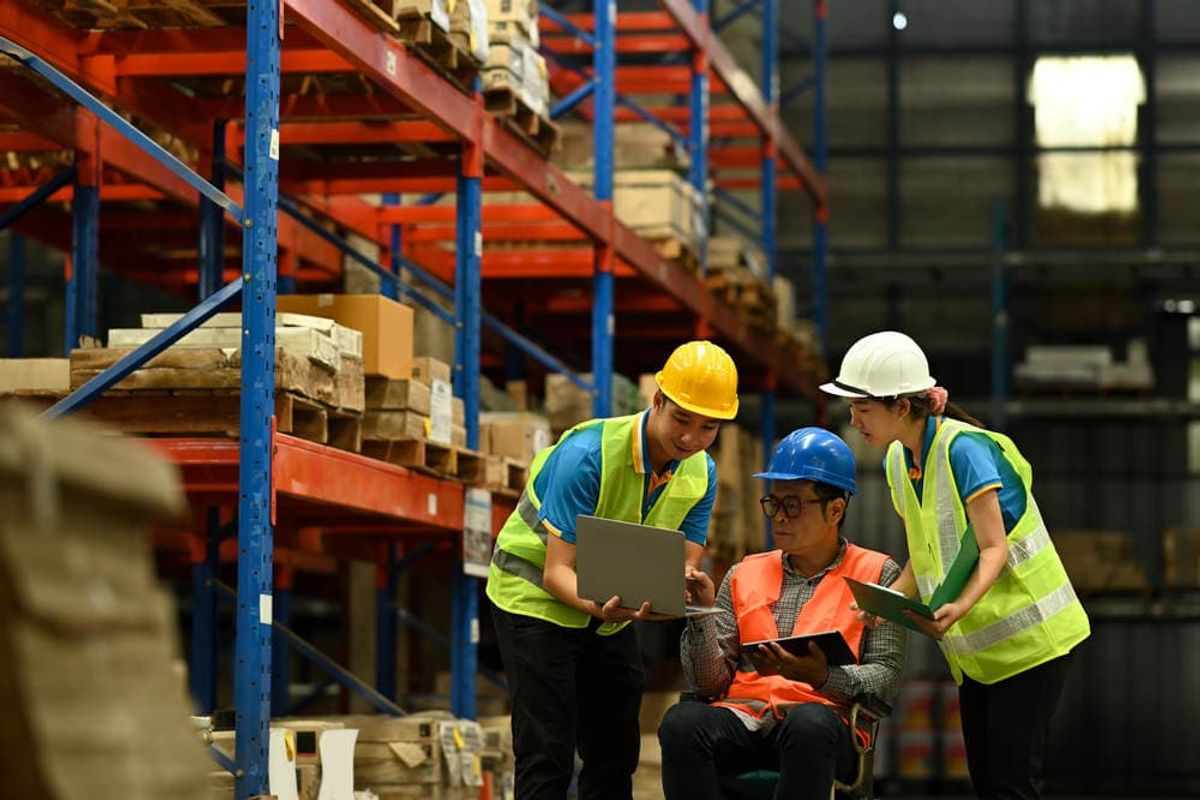
Enhanced efficiency and productivity
With the seamless integration of IoT in the workplace, most manufacturing processes suddenly experience a transformative change. Real-time data insights, gained through connected devices and sensors, form the foundation of this revolution. The strengths of IoT are utilized in auditing and leveraging big data, enabling meticulous orchestration of operations. This not only leads to increased efficiency but also protects against operational downtimes.
The information provided allows for actionable recommendations - from processes that can be scaled to those that have become redundant and can be eliminated - enabling a proactive approach.
The predictive approaches enabled by IoT empower companies to take proactive measures, prevent potential disruptions, and ensure a continuous, smooth workflow that maximizes productivity.
Workplace safety
In terms of workplace safety, IoT acts like a vigilant guardian. It's as if Big Brother is not an enemy but an ally. Embedded sensors with their monitoring capabilities delve deep into the workings of machines and equipment to enable more control. This continuous vigilance creates a culture of safety and fosters an environment where the workforce operates with confidence and is assured of their safety.
Quality assurance and control
In the realm of quality assurance, workplace IoT has its finger on the pulse – figuratively speaking. The precision of IoT-enabled devices in monitoring and analyzing data sets a new standard for maintaining product quality.
It not only eliminates human errors but also optimizes operational flow. The combination of IoT technology and quality control ushers in an era where defects are detected early to ensure that every product embodies excellence.
Inventory and supply chain optimization
The advent of IoT signifies a paradigm shift in managing inventory and supply chain processes. Real-time tracking and management of inventory, once laborious, becomes almost effortless with the integration of IoT technologies. The result: increased efficiency along the entire supply chain, from procurement to delivery. Precise data on the location, condition, and stock of goods is now available.
Pioneering energy management and sustainability
In today's era, characterized by a pursuit of sustainability, the integration of smart sensors presents a significant opportunity in optimizing energy consumption. This leads to less waste and promotes a shift in thinking and the cultivation of sustainable practices – not only as a strategic marketing and branding decision but also as a measure for significant cost reduction.
Advancements in IoT technology and their future applications
The emergence of smart factories and the onset of Industry 4.0 mark a transformative period in manufacturing, characterized by connected, data-driven processes. In this paradigm shift, producers must recognize the comprehensive potential of IoT with its multitude of use cases, including AI-driven predictive analytics and unprecedented connectivity.
The impact of IoT on manufacturing workplaces, including efficiency, safety, and sustainability, extends across all areas within a manufacturing company. Producers are therefore called upon to seamlessly integrate IoT into the workplace as well as into all operational processes.
It is crucial to harness the immense capabilities of this technological advancement to maintain competitiveness in an industry increasingly characterized by technological competence.