How IoT Data Collection and Visualization Drives Smarter Decision-Making
IoT Data Collection and Visualization provide real-time insights. Learn how IoT enables intelligent data collection, visualization, and analysis.
Data has become the lifeblood of modern business processes. The ability to effectively collect, process, and understand data now separates industry leaders from those falling behind.
IoT-based data collection systems have fundamentally changed how companies gather and use information. Unlike traditional methods, IoT devices capture continuous real-time data streams. However, collecting data alone offers little value without the ability to interpret and respond to it. Here, visualization transforms raw numbers into actionable intelligence. The combination of IoT data collection and visualization creates a powerful framework for smarter decision-making.
Understanding IoT Data Collection and Visualization
Data collection in IoT involves the continuous gathering of information by connected devices, sensors, and systems deployed in physical environments. These devices monitor countless parameters – temperature, pressure, motion, location, vibration, humidity, energy consumption, and many others – and transmit measurements automatically without human intervention.
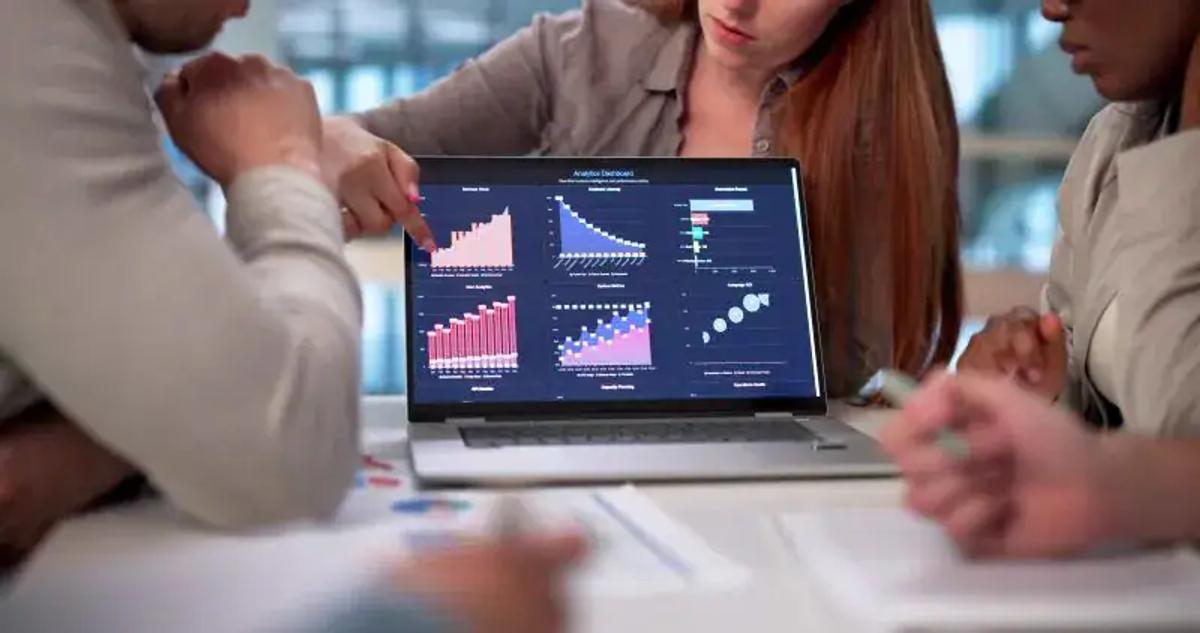
The scope of IoT data collection extends far beyond simple sensor measurements. Modern IoT systems capture operational data from industrial machinery, track vehicle movements and performance, monitor environmental conditions in facilities, record customer interactions with smart products, and gather behavioral data from connected devices. This comprehensive data collection provides organizations with unprecedented insights into their operations.
What distinguishes IoT for data collection from traditional approaches is the combination of automation, continuity, and scope. IoT systems operate around the clock, capturing data at frequencies ranging from multiple times per second to periodic intervals. A single manufacturing plant might deploy thousands of sensors, while a logistics company could simultaneously track millions of data points across its entire fleet.
The Role of Visualization in Understanding IoT Data
Raw IoT data arrives as streams of numbers that humans cannot easily interpret without processing and presentation. Data visualization converts these numerical datasets into visual formats – line charts showing trends over time, heatmaps revealing patterns across locations, bar charts for comparing different metrics, and comprehensive dashboards offering operational summaries at a glance.
Effective visualization does more than make data prettier. It enables quick understanding of complex information, highlights relationships between different variables, draws attention to anomalies requiring investigation, and supports rapid decision-making by presenting relevant information in context. According to a study by Aberdeen Group, organizations using visual data discovery tools are 28% more likely to find timely information compared to those relying solely on traditional business intelligence approaches.
Modern IoT visualization platforms offer interactive capabilities that allow users to dive into specific timeframes, filter data by various parameters, overlay different metrics for comparison, and customize views for different roles and needs. This interactivity transforms visualization from passive reporting into active exploration tools that support deeper understanding.
How IoT Data Collection Enhances Business Decisions
Real-Time Data for Immediate Action
Immediate Insights
The continuous nature of IoT data collection provides businesses with the most current awareness of operational conditions. Instead of waiting for end-of-day reports or weekly summaries, decision-makers can see what is happening right now across their operations. Manufacturing managers monitor production rates and quality metrics in real-time. Facility managers track energy consumption and environmental conditions moment by moment. Fleet operators continuously follow vehicle locations and performance.
This immediate visibility enables proactive management rather than reactive problem-solving. If equipment performance begins to decline, maintenance can be scheduled before failures occur. If demand patterns shift, inventory levels can be adjusted accordingly. If quality issues arise, production can pause immediately instead of continuing to produce defective products.
Examples of Real-Time Decisions
Real-time IoT data supports countless immediate decisions across various industries. Retailers dynamically adjust prices based on current inventory levels and customer traffic patterns. Energy companies continuously balance grid loads by monitoring consumption across regions. Transportation companies reroute vehicles instantly when traffic conditions change or unexpected delays occur.
Healthcare facilities use real-time patient monitoring data to adjust treatment protocols immediately when vital signs indicate concerning changes. Smart buildings optimize heating, cooling, and lighting based on current occupancy and environmental conditions. Agricultural operations adjust irrigation precisely based on real-time soil moisture measurements, conserving water while maintaining optimal growth conditions.
Improved Accuracy in Forecasting and Planning
Data-Driven Predictions
Historical IoT data lays the foundation for accurate forecasting models. By analyzing patterns in past sensor readings, operational metrics, and environmental conditions, companies can predict future outcomes with greater precision than traditional forecasting methods allow. Manufacturers predict equipment maintenance needs based on vibration patterns, temperature trends, and usage histories. Retailers forecast demand by analyzing historical sales data combined with external factors like weather and events.
Machine learning algorithms trained on IoT datasets identify subtle correlations that humans might overlook, further enhancing prediction accuracy. These models continuously refine themselves as new data arrives, adapting to changing conditions and improving forecast quality over time.
Smarter Planning
Better predictions enable superior planning across all business functions. Production schedules align more closely with actual demand as forecasts improve. Inventory management becomes more efficient when companies can accurately predict consumption patterns. Staffing levels match operational needs when planners understand workload fluctuations. Resource allocation improves when organizations can anticipate requirements rather than guessing based on limited historical information.
The financial benefits of improved planning extend across organizations. Reduced inventory costs, optimized staffing expenses, minimized equipment downtime, and better capacity utilization all contribute to stronger operational efficiency and profitability.
Identifying Patterns and Trends for Long-Term Strategy
Long-term trends often remain hidden in daily operational data until visualization reveals them. Time-series charts over months or years show gradual changes in equipment performance, seasonal demand fluctuations, or evolving customer behavior. Heatmaps reveal geographic patterns in sales, service requests, or equipment issues. Correlation analyses identify relationships between seemingly independent variables, suggesting optimization opportunities.
These visualized patterns inform strategic decisions about facility locations, product development priorities, market expansion opportunities, and capital investment needs. Organizations can identify declining trends requiring attention, recognize emerging opportunities worth pursuing, and validate strategic assumptions against actual operational data rather than relying solely on market research or intuition.
The Benefits of IoT Data Visualization in Decision-Making
Simplifying Complex Data for Stakeholders
Different stakeholders require different information presented in formats that suit their roles and technical backgrounds. Executives need high-level summaries showing key performance indicators and strategic metrics. Operations managers need detailed dashboards displaying real-time operational data. Technical specialists want access to raw data for in-depth analysis. Effective visualization platforms serve all these audiences by presenting the same underlying data in various formats tailored to specific needs.
Visual presentation also facilitates communication across organizational boundaries. When sales, operations, finance, and executive teams all view the same visualized data, discussions become more productive because everyone shares a common understanding of the current reality. Decisions gain stronger support when stakeholders can see the data justifying proposed actions.

Enhancing Operational Efficiency with Real-Time Dashboards
Real-time dashboards transform how organizations manage daily operations. Instead of reacting to issues after they cause disruptions, teams monitor early indicators signaling emerging problems requiring attention. Production managers continuously observe quality metrics and equipment performance indicators, intervening immediately when measurements drift outside acceptable ranges. Logistics coordinators track delivery progress in real-time, proactively addressing delays before they impact customer satisfaction.
Dashboard alerts automatically notify appropriate personnel when specific conditions occur, ensuring critical issues receive immediate attention even if team members are not actively monitoring displays. These automated notifications combined with visual context enable rapid response to situations requiring human judgment while freeing staff from constant manual monitoring of routine operations.
Supporting a Data-Driven Culture Across the Organization
Widespread access to visualized IoT data helps embed data-driven thinking into organizational cultures. When employees at all levels can easily access relevant data visualizations, they naturally begin to incorporate information into their daily decisions rather than relying solely on experience or intuition. This cultural shift improves decision quality across countless small decisions that collectively drive organizational performance.
Organizations fostering data-driven cultures also benefit from improved accountability. When performance metrics are visible and continuously updated, teams take greater ownership of outcomes. Visualization makes progress toward goals concrete and measurable, motivating sustained efforts and enabling early course corrections when results fall short of targets.
Training becomes more effective when new employees can explore visualized data to understand operations rather than relying solely on verbal explanations. Visualization also helps preserve institutional knowledge by capturing operational patterns and best practices in accessible formats that outlast individual employee tenure.
Benefit CategoryMain BenefitsBusiness ImpactReal-Time InsightsImmediate Awareness, Proactive ManagementReduced Downtime, Faster ResponseForecast AccuracyBetter Predictions, Smarter PlanningLower Costs, Optimized ResourcesTrend IdentificationLong-Term Pattern RecognitionStrategic Advantage, Informed InvestmentsStakeholder CommunicationSimplified Complexity, Shared UnderstandingBetter Decisions, Stronger AlignmentOperational EfficiencyContinuous Monitoring, Automated AlertsImproved Productivity, Reduced Waste
Unlocking Business Potential Through IoT Data
IoT data collection and visualization represent more than incremental improvement – they fundamentally transform how organizations understand their operations and make decisions. Companies investing in these technologies gain competitive advantages that compound over time.
The accessibility of technology continues to improve while costs decrease. Cloud-based platforms eliminate large upfront investments. Sensor costs steadily decline while capabilities expand. Organizations beginning their IoT data journey should start with clear objectives focused on specific business challenges. Start small, prove value, then systematically expand.
The future belongs to organizations that effectively leverage data. IoT data collection provides the raw material for comprehensive understanding. Visualization transforms this raw material into actionable intelligence. Together, they drive the smarter decision-making that separates industry leaders from laggards in an increasingly competitive business landscape.