How AI and IoT are Redefining Intelligent Automation (This Time for Real)
Logistics gets smart: IoT, AI, and automation boost efficiency, reduce costs, and promote sustainable processes.
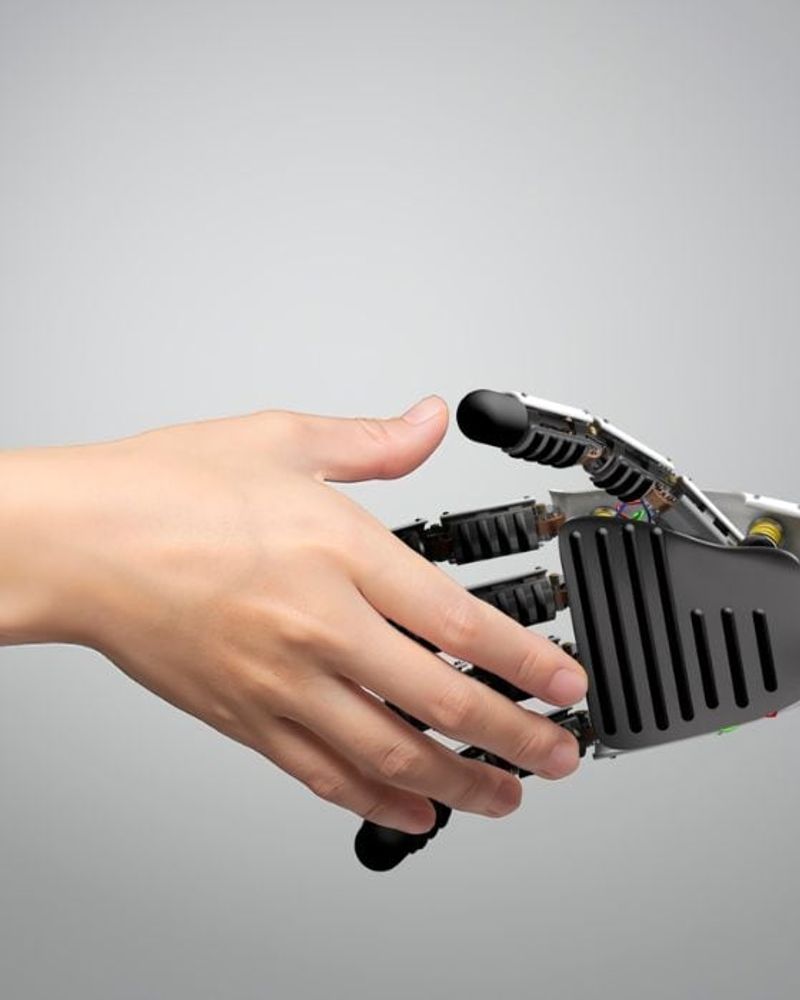
Technology has made us many great promises — not all of them have been kept. Where are they, the flying cars, the hovering skateboard from "Back to the Future," or the Mars colony? Instead, we have countless smartphone variants and refrigerators with Twitter access. The dream of the Jetsons? Disappointingly misguided. But now and then, we experience a real technological breakthrough – one that delivers on its promises. The connection of Artificial Intelligence (AI) and the Internet of Things (IoT) is exactly that: a true paradigm shift.
This is not about the usual buzzword bingo. Not about empty phrases meant to hit somewhere. It's about a fundamental change in how companies operate – and how they begin to achieve what was previously out of reach. It's about machines that not only function but think.
Sensors that not only detect but predict. Automation that not only runs but learns. This is the reality that AI and IoT create – and those who don't pay attention have already missed the boat. Because AI is not a tool. It is an active agent. And that changes everything.
How AI and IoT Accelerate Innovation Together
AI and IoT are often mentioned in the same breath, but they are not the same. Imagine IoT as a network of eyes, ears, and fingers – sensors that collect data: temperature, movement, air quality, vibrations along the supply chain. But without AI, all of this remains mere information. Raw. Unordered.
Only AI turns it into knowledge. It is the brain that recognizes patterns in datasets. It transforms noise into direction. Without it, IoT is like a camera without someone watching the screen.
Not a Tool, but an Actor
Here lies the crucial dividing line: IoT is a tool. AI is an actor. Until now, we created technologies that supported us – but always with a human at the center, operating, interpreting, directing the device.
AI, on the other hand, acts independently. It analyzes, prioritizes, decides. A microscope with AI would not only deliver images – it would evaluate them itself, recognize connections, and make recommendations. And it does so at a speed and quality that regularly surpasses human capacities.
This is the game changer: AI does not need us for interpretation. It provides results – not just data.

Making Dumb Sensors Smarter
In the manufacturing industry, for example, IoT sensors are standard: they monitor machines, air quality, power consumption. But without AI, they flood systems with data that no one ever looks at – simply because it's too much.
With AI, however, these data volumes turn into operational intelligence. It recognizes patterns, predicts failures, reduces waste, and increases efficiency.
Need examples?
- Oil and gas companies use AI-driven IoT sensors to detect pressure anomalies in pipelines and stop leaks before they cause environmental damage.
- Retailers analyze customer movement patterns, AI optimizes store layout for increased sales.
- Logistics companies use AI-assisted Trackers, to adjust routes in real-time, avoiding traffic jams, weather delays, and fuel waste.
IDC estimates that by 2025, 41.6 billion IoT devices worldwide will generate 79.4 zettabytes of data. Without AI, this remains: digital noise.
Case Study: John Deere's AI-Driven Smart Farming
John Deere has transformed from a tractor manufacturer to a digital agricultural powerhouse. Their smart farming solution measures moisture, nutrients, and weather through soil sensors. The AI processes the data, recognizes patterns, and provides recommendations on when and where to plant, water, or fertilize.
The result: 15% less resource usage, lower costs, higher yields.
The astonishing part? For the first prototype of the algorithm, a single IT professional with today's open-source tools wouldn't even need a workday. The difference lies not in the technology. But in the mindset.
Generative AI: IoT with Predictive Power
If classical AI helps IoT understand data, generative AI takes it to a new level. Machines no longer just react – they anticipate.
Predictive Maintenance: Fixing Problems Before They Occur
A failed machine can cost millions. Unplanned downtime in the automotive industry alone costs manufacturers $22,000 per minute.
That's why Rolls-Royce, for example, relies on AI and IoT: sensors in the engines stream data in real-time. AI detects the smallest anomalies – changes in oil viscosity, slight fluctuations in turbine speed – that indicate a problem long before a technician notices them. The result: 30% lower maintenance costs. Safer flights. Fewer delays.
It's about more than efficiency: it's about brand perception. Those who don't use AI today seem outdated. Alibaba also integrates AI features like image and video generation independently of its actual services – often more for image reasons than necessity. It's about showing: "We're at the forefront."
AI as a Security Guarantee
AI in IoT is more than efficiency: it protects.
- In industry, it detects overheated devices before they catch fire.
- On construction sites, sensors warn in real-time of structural weaknesses.
- In mining, AI-driven environmental sensors prevent gas leaks and landslides.
Market estimates suggest that the AI market in the IoT sector will grow to $16.2 billion by 2027. So, those who have not yet invested in intelligent automation are voluntarily giving the competition a competitive advantage.

Data Analysis: Unlocking the Full Potential of AI and IoT
Data is only valuable if you do something with it. Yet many companies drown in information – and starve for insight.
AI-Driven Analytics: Turning Data into Decisions
Every company wants to be "data-driven." But without AI, most of the data generated by IoT just sits on some server, collecting digital dust. AI-driven analytics change that.
- Retail chains use AI to predict consumer demand and adjust inventories before products run out.
- Hospitals deploy AI-driven IoT devices to monitor patients' vital signs and alert doctors to issues before symptoms become visible.
- Smart Cities optimize traffic flow using real-time AI analysis of road sensors and GPS data.
Companies that use AI-driven analytics report efficiency gains of 20-30%. In highly competitive markets, the decisive advantage.
Automated Data Processing: The End of Gut Feeling
Sure, gut feeling will score a point now and then, but data and pattern recognition are the true keys to success. AI eliminates this uncertainty by automating data processing – recognizing trends, uncovering inefficiencies, and providing cold, hard facts.
It's not just about making better decisions. It's about making decisions at the speed of light. And in a market where speed is everything, hesitation is the first step towards obsolescence.
AI + IoT: Act Now or Fall Behind
This is not a vision of the future – it is the present.
We are in the middle of a race: Who has the best AI? Who uses it most effectively? The question is no longer "If," but "How."
AI and IoT are no longer science fiction concepts – they are already transforming entire industries and creating companies that act more agilely, think smarter, and use resources more efficiently.
Let's explore together how AI and IoT can also transform your processes. Now is the right time.