What are IoT devices?
Learn what IoT devices are, how they work, and why they are indispensable in smart homes, logistics, and Industry 4.0.
IoT devices (Internet of Things devices) are physical objects equipped with sensors, actuators, software, and network technologies. They collect data from their environment, transmit it via wireless technologies to platforms or cloud systems, enabling intelligent automation.
Whether as smart thermostats in smart homes, GPS trackers in logistics or sensors in Industry 4.0 – IoT devices form the foundation of the Internet of Things, connecting the physical with the digital world.
How do IoT devices work?
An IoT device goes through several process steps:
- Data collection: Sensors collect physical quantities such as temperature, movement, humidity, position, or energy consumption.
- Processing: Built-in microcontrollers analyze initial data and forward it.
- Data transmission: Transmission standards such as WLAN, cellular (LTE, NB-IoT, 5G), LoRaWAN, or Bluetooth send the data to central platforms.
- Data analysis: On an IoT platform or in the cloud, the data is collected, visualized, and often evaluated using AI.
- Action: Based on the analyses, actuators or applications can automatically respond, e.g., alarm messages, control commands, or process optimizations.
Types of IoT devices
- Sensors: Temperature, humidity, vibration, or GPS sensors.
- Actuators: Devices that execute commands (e.g., open valves, start motors).
- Wearables: Smartwatches, fitness trackers, or medical devices.
- Smart Appliances: Intelligent household appliances like washing machines or refrigerators.
- Industrial devices: Machines with condition monitoring, predictive maintenance sensors.
Benefits of IoT devices
- Transparency: Data from processes and environments are accessible at any time.
- Efficiency increase: Optimization of operations through automation.
- Safety: Quick detection of malfunctions or hazards.
- Sustainability: Energy and resource-saving potential through intelligent control.
- Scalability: From individual devices to billions of connected units worldwide.
Use cases
- Smart Home: Intelligent control of lighting, heating, and security systems.
- Logistics: Real-time tracking of containers, vehicles, and pallets.
- Industry 4.0: Predictive maintenance, machine monitoring, and process automation.
- Healthcare: Wearables for vital data monitoring or IoT devices in telemedicine.
- Energy & Environment: Smart meters, weather stations, and air quality sensors.
Future perspective
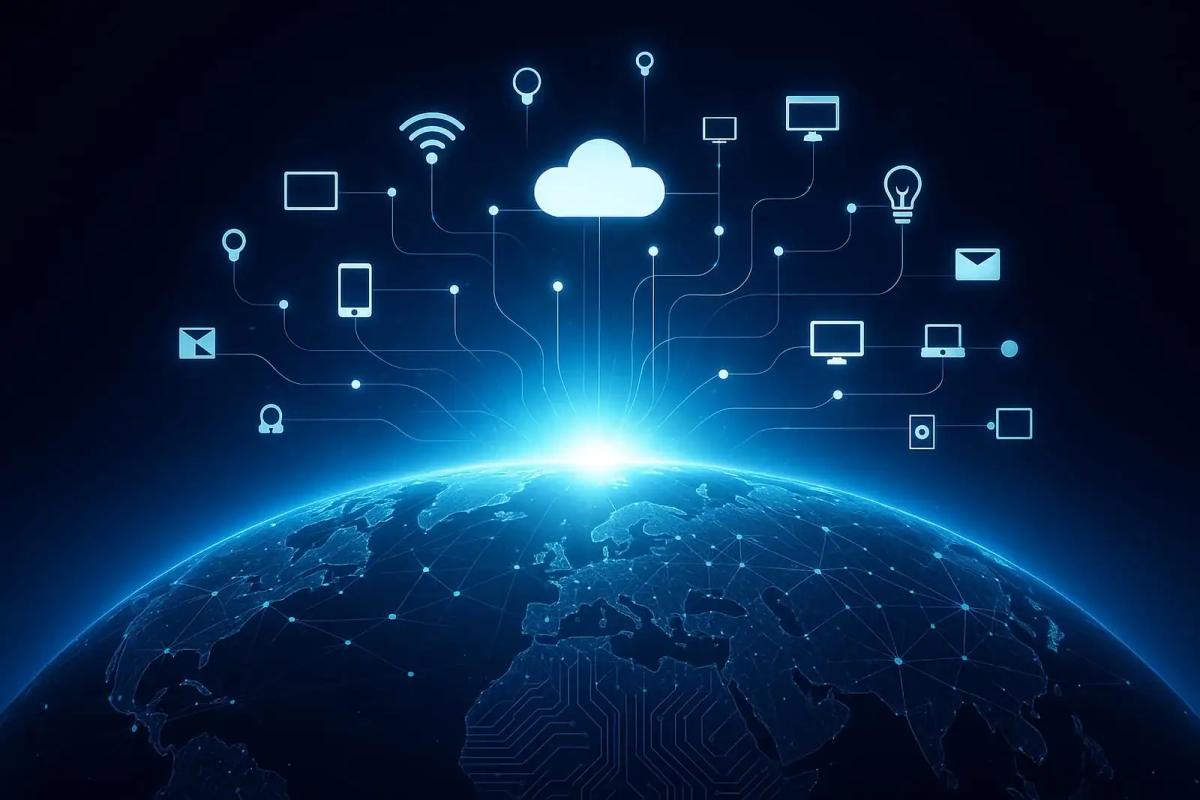
With the increasing spread of 5G, edge computing, and artificial intelligence, IoT devices will become even more powerful. In the future, they will not only collect data but also perform local analyses and make autonomous decisions before information even reaches the cloud.
Summary
IoT devices are the foundation of the Internet of Things. They collect data, connect systems, and enable intelligent applications in almost all areas of life and business. From smart homes to Industry 4.0, they drive digital transformation and open up new possibilities for efficiency, safety, and sustainability.
We show you how easy Asset Tracking can be today. We offer free and non-binding advice